


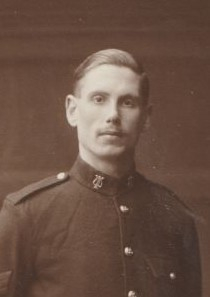
James Andrew's Story.
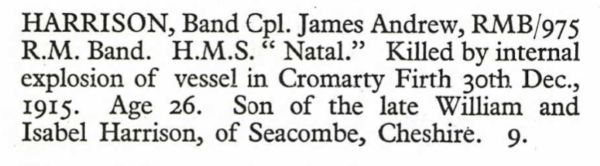
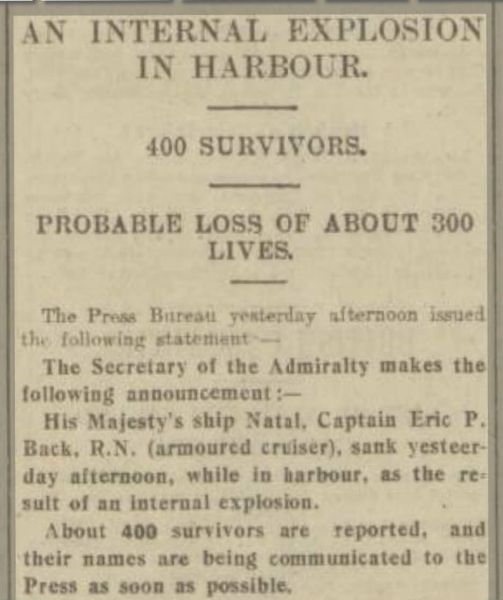
James Andrew Harrison, aged 26, died when the cruiser HMS Natal suffered an internal explosion on 30th December 1915.
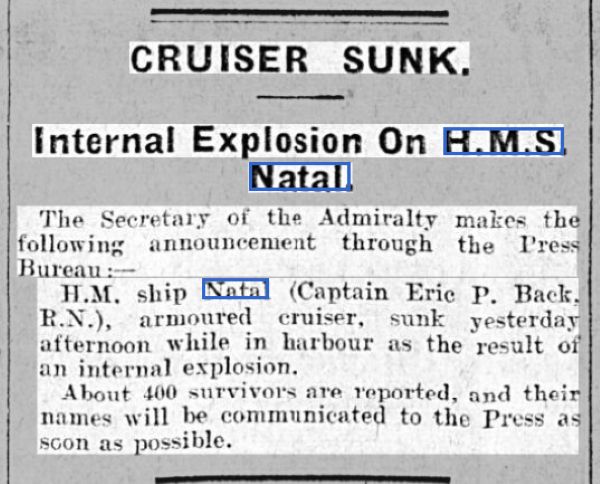
Widnes Examiner - Saturday 01 January 1916
James Andrew Harrison was born on 15th July 1889, the second son of William Harrison (1861–1894) and Isabella Mary Joynson (1862–1892). He had siblings William Alfred (1883 - 1971), Ada Annie (1885 - 1974) and Harold (1891 –1915). There was another sister Maggie Mildred, who died in 1888, aged one year. The family home was at 6 William Street, Seacombe, Wallasey. By the age of five, James had been orphaned, and in 1901 he was living in an Orphan's Home in Liverpool with his younger brother Harold.
Widnes Examiner - Saturday 01 January 1916
James Andrew Harrison was born on 15th July 1889, the second son of William Harrison (1861–1894) and Isabella Mary Joynson (1862–1892). He had siblings William Alfred (1883 - 1971), Ada Annie (1885 - 1974) and Harold (1891 –1915). There was another sister Maggie Mildred, who died in 1888, aged one year. The family home was at 6 William Street, Seacombe, Wallasey. By the age of five, James had been orphaned, and in 1901 he was living in an Orphan's Home in Liverpool with his younger brother Harold.
The 1911 census shows 21 year old James living with his elder brother William and his family at 13 Hallville Road, Seacombe. By then he was a Band Corporal in the Royal Marines Band. His sister Ada was working as a servant at 50 Gordon Road, Ealing.
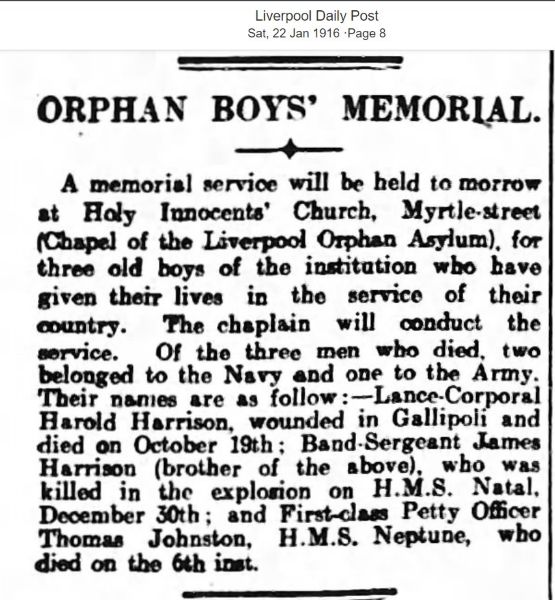
On 15th October 1915, James' brother Lance-Corporal Harold Harrison died in Manchester of wounds sustained in Galippoli. He was 24 years old. Just eleven weeks later, James was killed in an explosion aboard HMS Natal, in the Cromarty Firth, near Invergordon, Scotland.
James had enlisted into the Royal Marines at Liverpool on 21st September 1905, when he was sixteen years old. By then he was 5' 6" in height, with auburn hair and brown eyes.
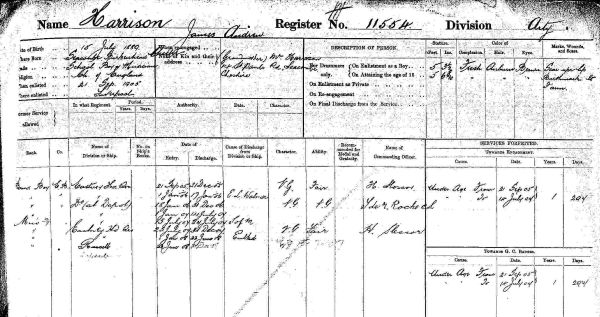
James appears to have been a tuba player. He started off his Royal Marines career with three months at the Royal Naval School of Music, Eastney Barracks, Portsmouth, before serving on a number of ships including HMSs Russell, Superb and Dominion. Although he was a bandsman, he would have had shipboard duties alongside the other Royal Marines (who provided security and manned weaponry). The bandmen were often employed as medical orderlies in battle. His last ship was HMS Natal (1907) an armoured cruiser (nicknamed ‘Sea Hearse’) which he joined in 1912. (His naval career is listed in detail at the end of this page.)
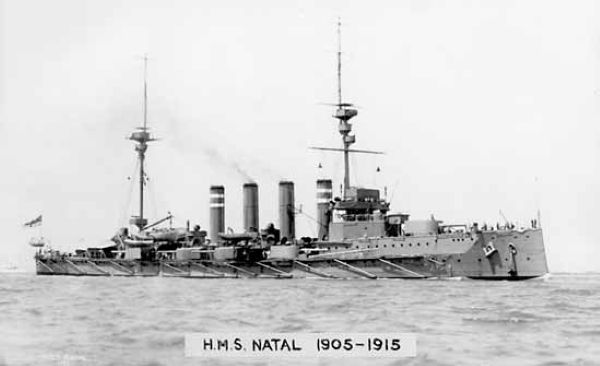
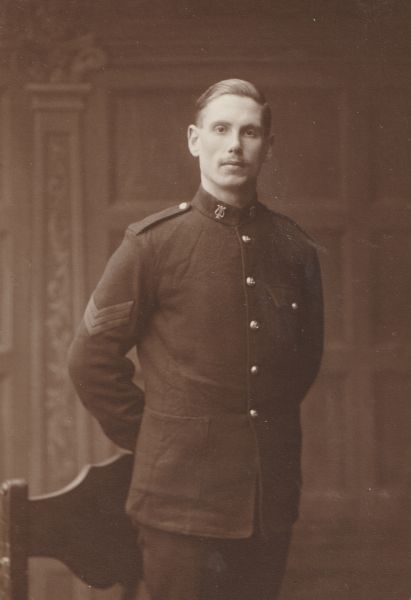
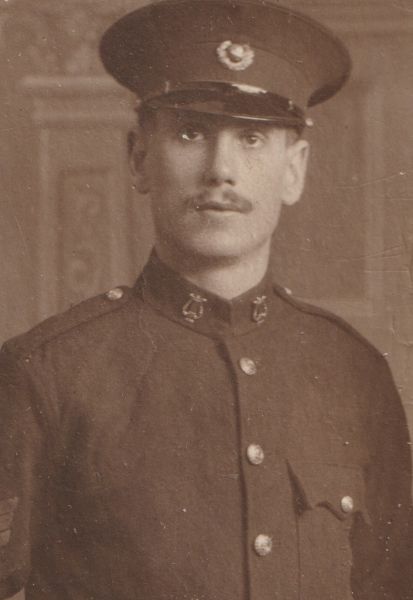
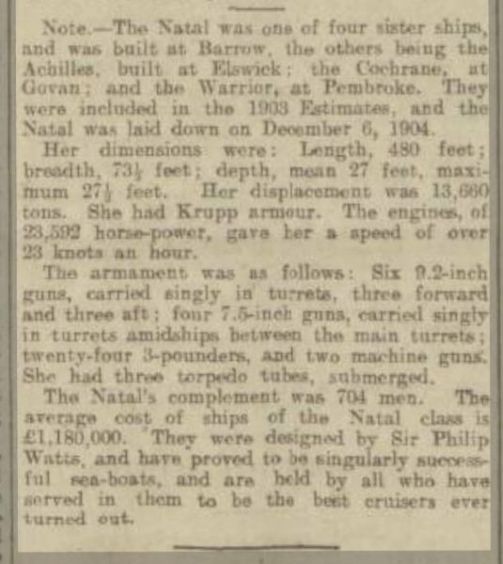
In 1913, HMS Natal joined the 2nd Cruiser Squadron of the Grand Fleet and in January 1915 was refitted at Cromarty. Natal spent much of 1915 uneventfully patrolling the North Sea until she began a brief refit at the Birkenhead shipyard of Cammell Laird on 22nd November 1915. Cammell Laird was very close to James' home town, so perhaps he visited his brother William on 5th December, before the ship rejoined the 2nd Cruiser Squadron at Scapa Flow. Twelve days later the squadron sailed to Cromarty Firth. On 30th December 1915, Natal was lying in the Cromarty Firth with her squadron, under the command of Captain Eric Back. The captain was hosting a film party aboard and had invited the wives and children of his officers, one civilian friend and his family, and nurses from the nearby hospital ship Drina to attend. A total of seven women, one civilian male, and three children were in attendance that afternoon. Shortly after 15:25, and without warning, a series of violent explosions tore through the rear part of the ship. She capsized five minutes later. Some thought that she’d been torpedoed by a German U-boat or detonated a submarine-laid mine, but examination of the wreckage revealed that the explosions were internal. The divers sent to investigate the ship reported that the explosions began in either the rear 9.2-inch shellroom or the 3-pounder and small arms magazine. The Admiralty court-martial in the causes of her loss concluded that it was caused by an internal ammunition explosion, possibly due to faulty cordite.
The Admiralty issued a revised list of the dead and missing that totalled 390 in January 1916, but did not list the women and children on board that day. Losses are listed from 390 to 421. Amongst them was her Captain Eric Percy Coventry Back, RN (5 August 1870 - 30 December 1915).
With her hull still visible at low water, it was Royal Navy practice on entering and leaving Cromarty, right up to the Second World War, for every warship to sound “Still”, and for officers and men to come to attention as they passed the wreck.
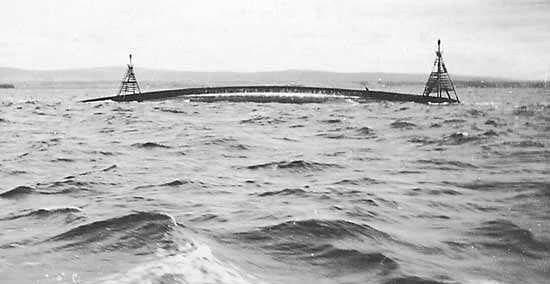
After numerous attempts, much of the ship was salvaged. The remainder was blown up in the 1970s to level the wreck so that it would not be a hazard to navigation She is marked by a modern buoy.

On 15th October 1915, James' brother Lance-Corporal Harold Harrison died in Manchester of wounds sustained in Galippoli. He was 24 years old. Just eleven weeks later, James was killed in an explosion aboard HMS Natal, in the Cromarty Firth, near Invergordon, Scotland.
James had enlisted into the Royal Marines at Liverpool on 21st September 1905, when he was sixteen years old. By then he was 5' 6" in height, with auburn hair and brown eyes.
James appears to have been a tuba player. He started off his Royal Marines career with three months at the Royal Naval School of Music, Eastney Barracks, Portsmouth, before serving on a number of ships including HMSs Russell, Superb and Dominion. Although he was a bandsman, he would have had shipboard duties alongside the other Royal Marines (who provided security and manned weaponry). The bandmen were often employed as medical orderlies in battle. His last ship was HMS Natal (1907) an armoured cruiser (nicknamed ‘Sea Hearse’) which he joined in 1912. (His naval career is listed in detail at the end of this page.)
In 1913, HMS Natal joined the 2nd Cruiser Squadron of the Grand Fleet and in January 1915 was refitted at Cromarty. Natal spent much of 1915 uneventfully patrolling the North Sea until she began a brief refit at the Birkenhead shipyard of Cammell Laird on 22nd November 1915. Cammell Laird was very close to James' home town, so perhaps he visited his brother William on 5th December, before the ship rejoined the 2nd Cruiser Squadron at Scapa Flow. Twelve days later the squadron sailed to Cromarty Firth. On 30th December 1915, Natal was lying in the Cromarty Firth with her squadron, under the command of Captain Eric Back. The captain was hosting a film party aboard and had invited the wives and children of his officers, one civilian friend and his family, and nurses from the nearby hospital ship Drina to attend. A total of seven women, one civilian male, and three children were in attendance that afternoon. Shortly after 15:25, and without warning, a series of violent explosions tore through the rear part of the ship. She capsized five minutes later. Some thought that she’d been torpedoed by a German U-boat or detonated a submarine-laid mine, but examination of the wreckage revealed that the explosions were internal. The divers sent to investigate the ship reported that the explosions began in either the rear 9.2-inch shellroom or the 3-pounder and small arms magazine. The Admiralty court-martial in the causes of her loss concluded that it was caused by an internal ammunition explosion, possibly due to faulty cordite.
The Admiralty issued a revised list of the dead and missing that totalled 390 in January 1916, but did not list the women and children on board that day. Losses are listed from 390 to 421. Amongst them was her Captain Eric Percy Coventry Back, RN (5 August 1870 - 30 December 1915).
With her hull still visible at low water, it was Royal Navy practice on entering and leaving Cromarty, right up to the Second World War, for every warship to sound “Still”, and for officers and men to come to attention as they passed the wreck.
After numerous attempts, much of the ship was salvaged. The remainder was blown up in the 1970s to level the wreck so that it would not be a hazard to navigation She is marked by a modern buoy.
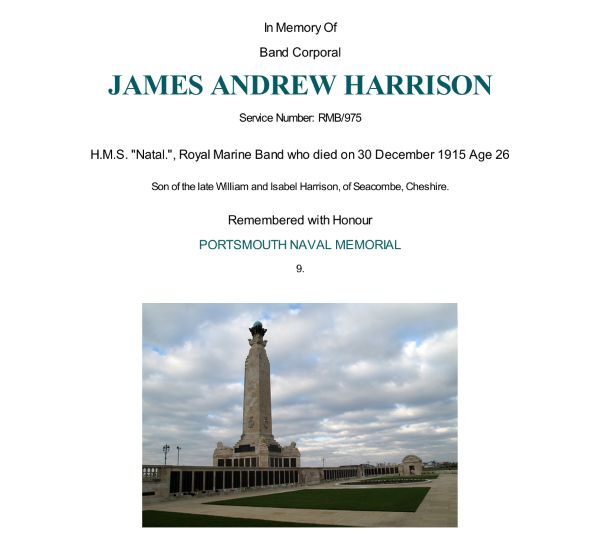
James' body was never recovered, so he has no burial site. The remains of the wreck of HMS Natal are designated as a controlled site under the Protection of Military Remains Act 1986 as a war grave.
A service of remembrance was held on 23rd January 1916 at the Holy Innocents' Church, in Liverpool for James, his brother Harold and another man who had lived in their Orphans' Asylum.
A service of remembrance was held on 23rd January 1916 at the Holy Innocents' Church, in Liverpool for James, his brother Harold and another man who had lived in their Orphans' Asylum.
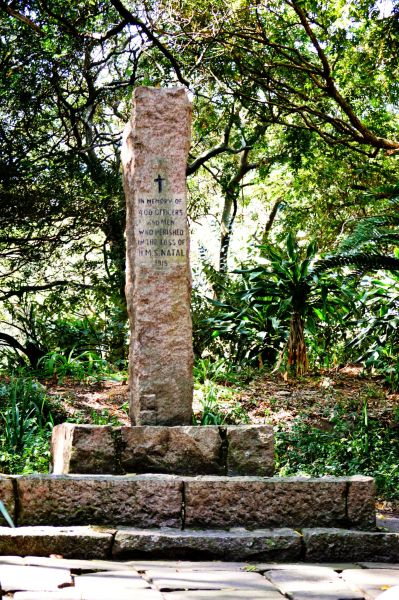
There are two memorials to those who lost their lives on HMS Natal in 1915. One is in Durban, South Africa. It was erected in 1927.
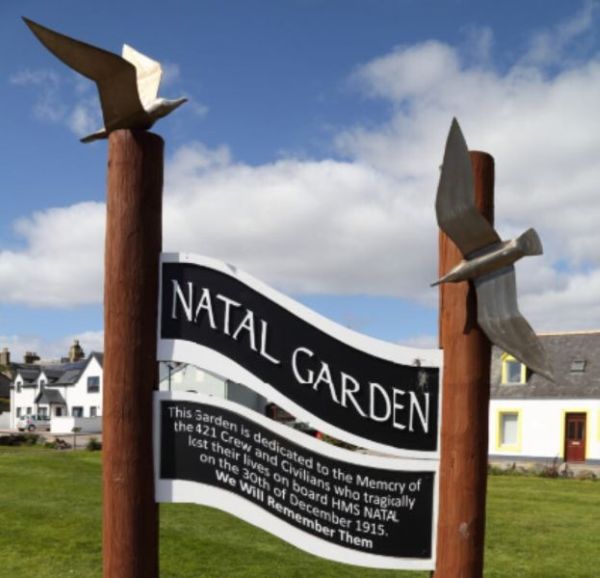
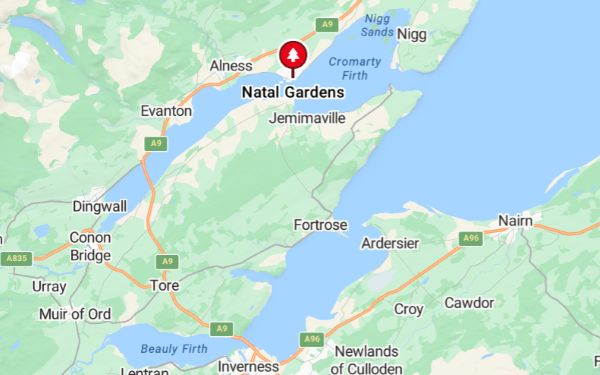
In 2000, Natal Garden in Invergordon was opened by Charlie Dimmock, close to the site in Nigg Bay, Cromarty Firth where James and his colleagues lost their lives.

Researched by Shena Lewington (April 2026)
James' naval career from his service record:
James' naval career from his service record:
21/09/1905 - 31/12/1915 Royal Naval School of Music, Eastney Barracks, Portsmouth
08/12/1906 - 31/12/1906 Royal Marines Barracks, Deal, Kent
1907 - 1907 RNSM, Eastney Barracks
01/01/1908 - 02/08/1909 HMS Russell (1901) a Duncan-class battleship with the Atlantic Fleet - In July 1908, HMS Russell accompanied the new battleship HMS Indomitable carrying the Prince of Wales to the tercentenary celebration in Quebec. On 16 July 1908, she collided with cruiser HMS Venus off Quebec, but suffered only minor damage. On 30 July 1909, Russell transferred to the Mediterranean Fleet at Malta, probably without James
03/08/1909 -31/12/1909 - 14/01/1910 HMS Superb (1914) a Bellerophon-class dreadnought battleship (almost copies of the original HMS Dreadnought)
14/02/1911 - 19/04/1911 RN School of Music, Eastney Barracks
20/04/1911 - 14/12/1912 HMS Dominion (1905) a King Edward VII class battleship (known as the Wobbly Eights' due to the difficulty encountered when trying to steer a straight course as they were designed to be extremely manoeuvrable) in the Second Division, Home Fleet. A signalman on HMS Dominion was awarded a medal for attempting to save a man overboard from HMS Britannia off Kingstown (St. Vincent & the Grenadines) on 5 July 1911.
15/10/1912 - 22/11/1912 RNSM, Eastney Barracks
23/11/1912 - 30/12/1915 HMS Natal (1907) an armoured cruiser (nicknamed ‘Sea Hearse’), officially in the Duke of Edinburgh-class, but usually referred to as the Warrior-Class due to the later build date and enhanced turreted secondary armament. By 1912 she was with the Second Cruiser Squadron, Home Fleet. On James Andrew’s maiden voyage on the Natal she had the duty of carrying the body of the U.S. Ambassador to Great Britain, Whitelaw Reid, back to New York in December 1912. She arrived in New York on Saturday 4th January 1913. After completing this mission, her crew gave her the nickname of ‘Sea Hearse’.