


John Douglas's Story.
John was born on 5th April 1918 to parents Emilio and Angela Delucchi and before the war he worked in the family ice cream business in Crewe.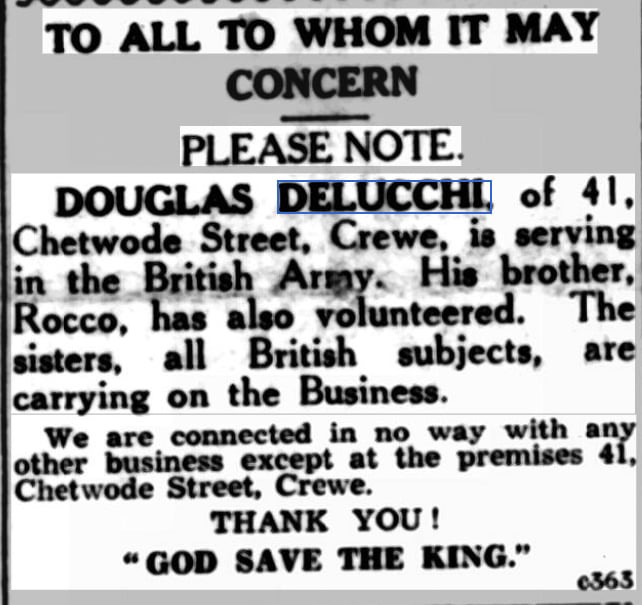
Given their Italian Heritage the Delucchi family issued this public notice
John Douglas ( Doug) Delucchi enlisted in the Army on 18 April 1940 and after completing his basic training he went out to Singapore to join his assigned unit 1st Battalion Manchester Regiment. The Battalion was part of the 2nd Malay Infantry Brigade assigned to beach defence in the South of the island. Although they had constructed beach defences they were never used as they were directed to surrender on 15 February 1942.
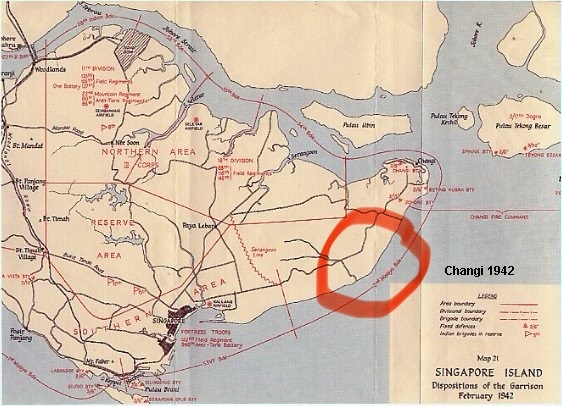
Singapore Defences in February 1942 with location of 2nd Malay Brigade highlighted

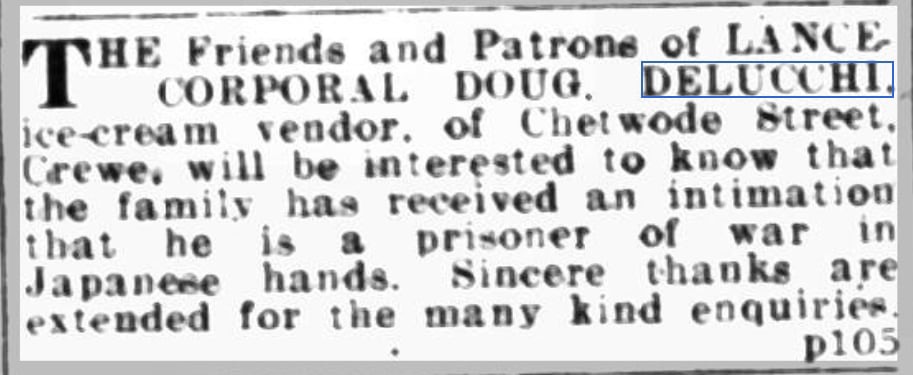
Doug's family didn't know of his fate until July 1943. This was published in the Crew Chronicle on July 17th 1943
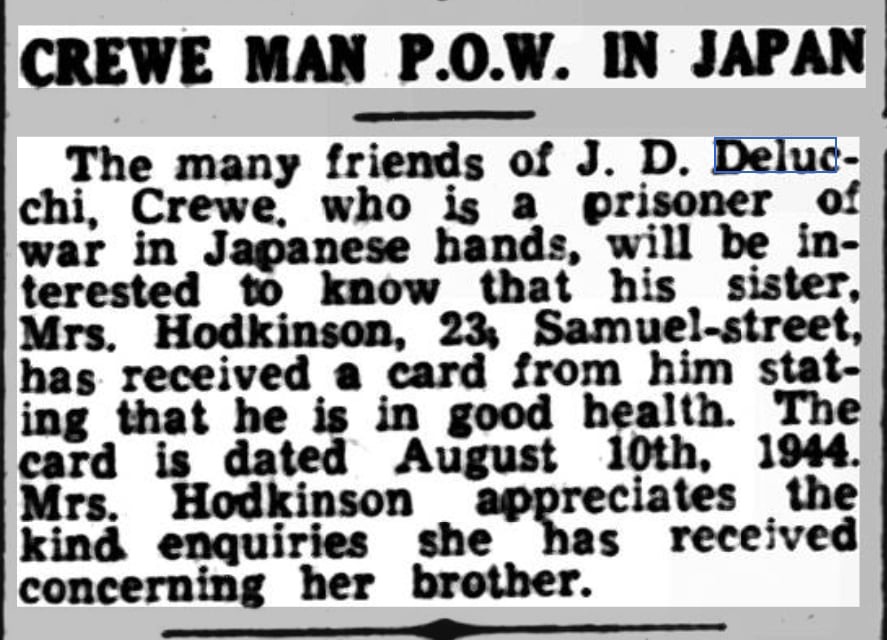
Crew Chronicle July 21 1945
John spent the rest of the war in the Changi Prisoner of War camp in Singapore and was released after the war ended on 2nd September 1945.
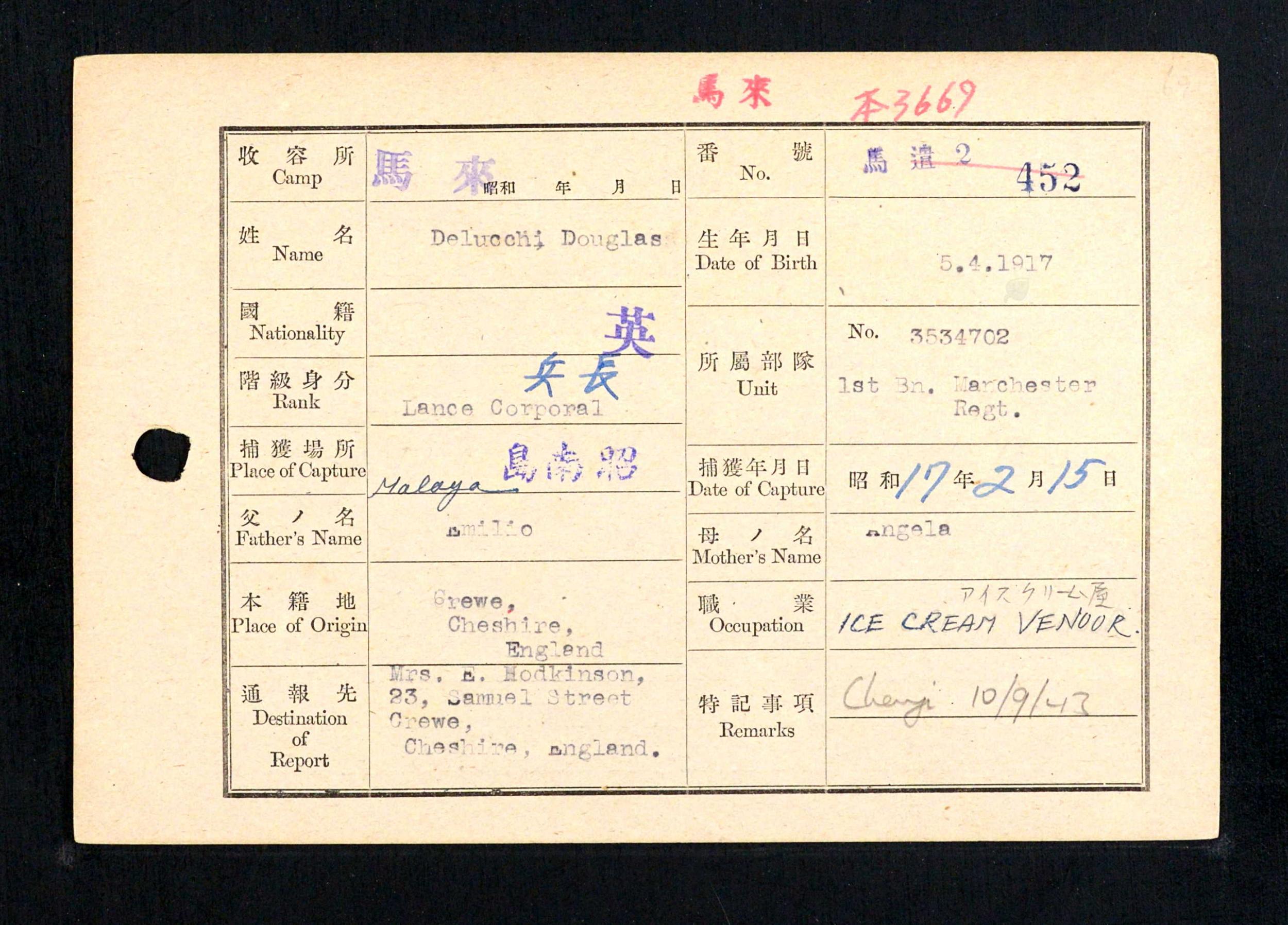
Doug's POW record card
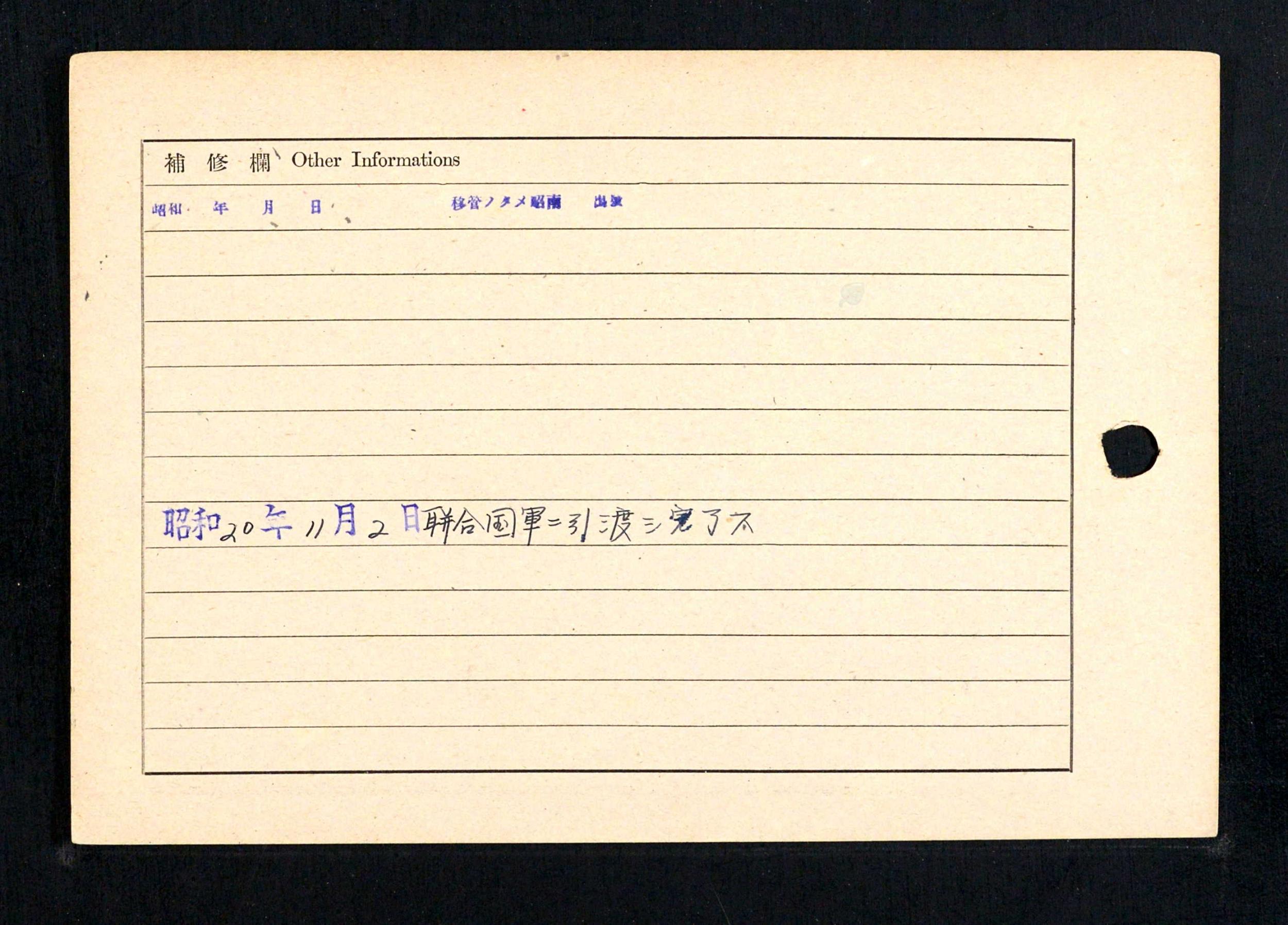
Reverse of Record card documenting handover to the Allies
Changi POW Camp
Changi POW camp was actually a collection of 7 camps sited in former army barracks and the civilian prison. Despite its notoriety conditions at Changi were generally better than most of the other Japanese POW camps. However in September 1942 this changed when following the escape and recapture of 4 prisoners the Japanese required all POW's to sign a " no escape" letter which they refused to do. In order to exert pressure on the prisoners they were all crammed into the courtyard at Selerang barracks and left out in the sun. With 15,000+ prisoners baking in the sun and some of the sick ones dying the Allied Officers told the men that they wouldn't be held responsible if they signed the letter as it was done under duress. The prisoners therefore signed the letter and were allowed back into their usual accomodation
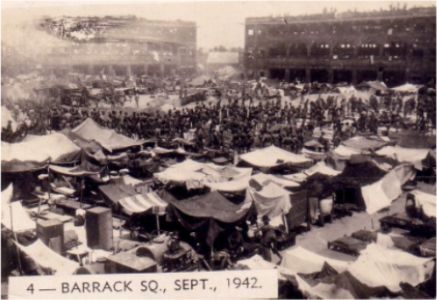
PoWs in Selerang Barracks courtyard
Release from Changi
The prisoners’ morale started to improve in early August when they observed American P38 fighters performing aerobatic displays over Singapore without any Japanese aircraft attempting to engage them. News filtered through that the war was coming to an end and on 15th August they got word that the Japanese had surrendered although the camp commander wouldn’t admit it at first. The Japanese stopped issuing instructions to working parties at this point. At the end of August two British paratroopers parachuted into the camp and started to prepare the men for their impending rescue.
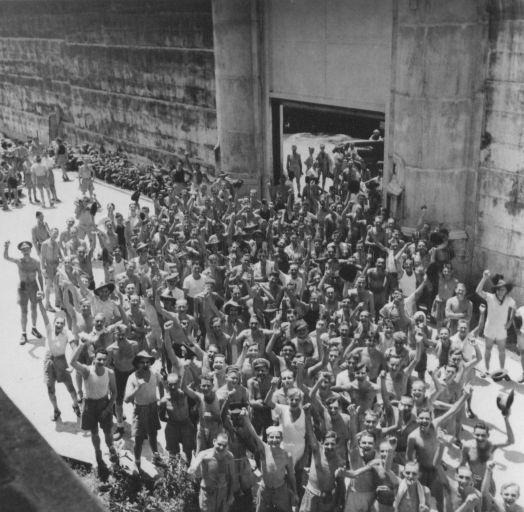
Jubilant POWs on their release from Changi
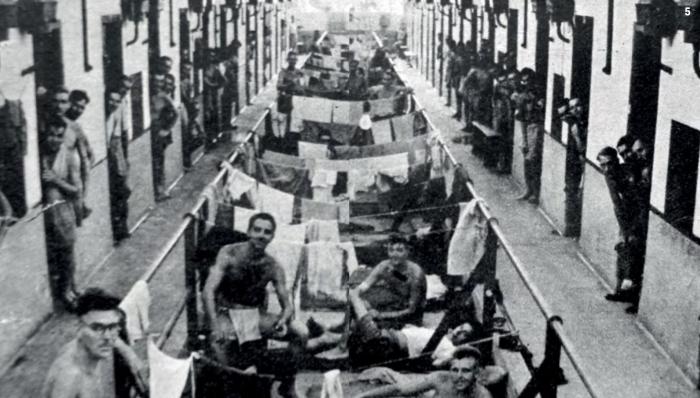
POWs pose for a photo before being released
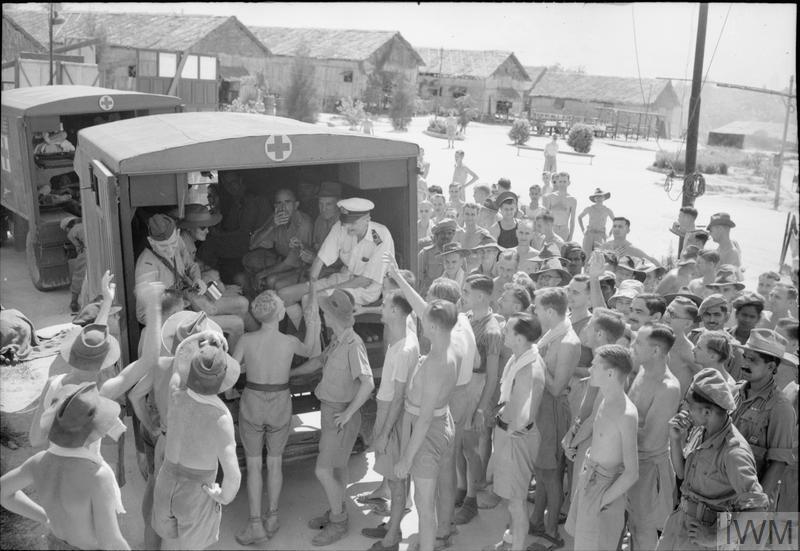
Sick prisoners were rescued first and taken by ambulance to hospital ships.
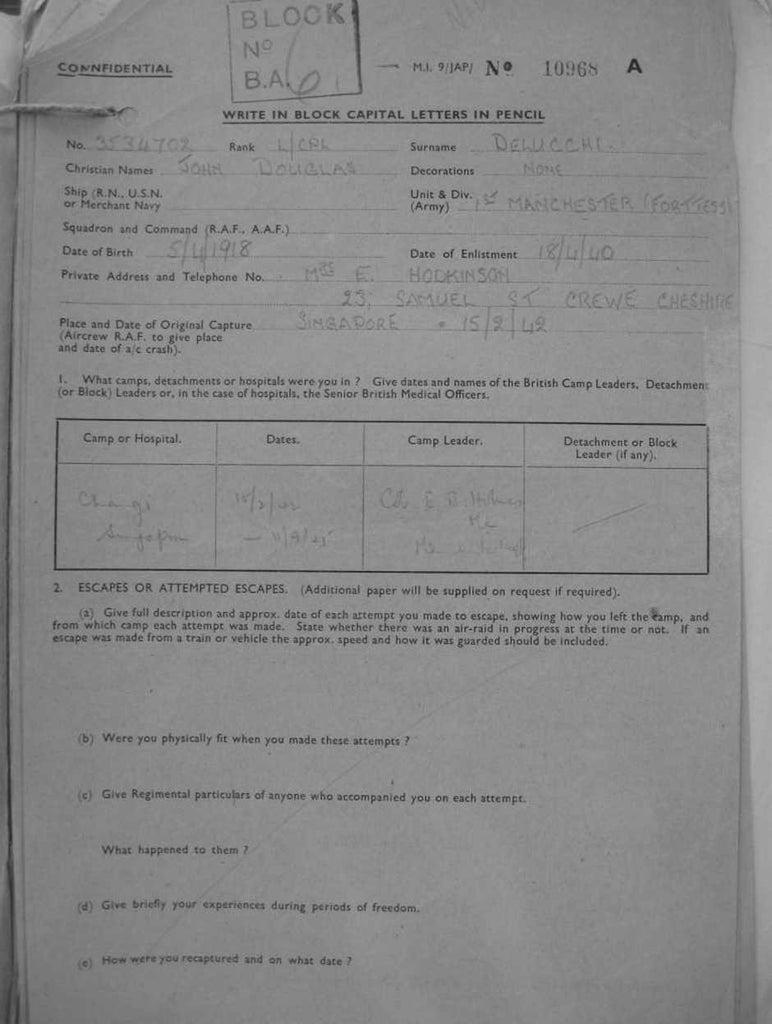
Doug's Liberation Questionnaire completed after his rescue
On 2nd September the Japanese guards disappeared from the camp and RAF aircraft flew over the camp dropping cigarettes and food supplies along with a message to the prisoners to remain in the camp. An advance party of 6 paratroopers including doctors parachuted into the camp to start treating the sickest prisoners and organizing the men for evacuation. On 5th September the 5th Indian Division arrived, secured the camp and liberated the prisoners. The occupants of the camp hospital were removed first and taken to hospital ships for treatment and repatriation then the remaining men were organized according to their units and loaded onto ships over the coming days which took them to Liverpool via Ceylon and the Suez Canal.According to the liberation questionnaire completed by Douglas after his release he wasn’t actually released until 11 September 1945
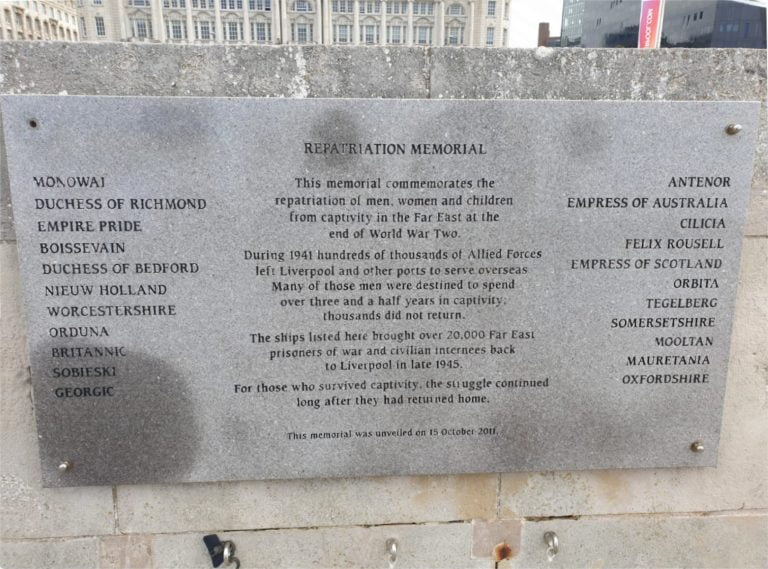
Repatriation ship commemorative plaque at Liverpool Docks
After returning to Crewe he became licensee of the Rifleman Inn pub then later the Express Pub in Mill Street Crewe until his death on 2nd September 1976 aged 58
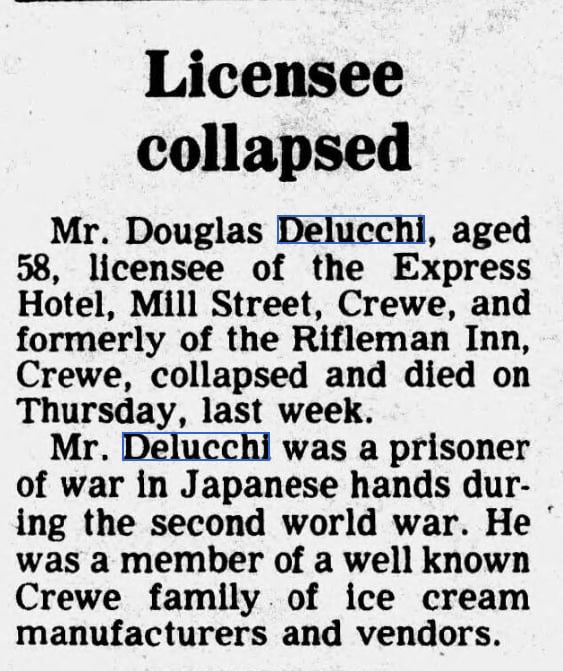
Crewe Chronicle 9 September 1976