


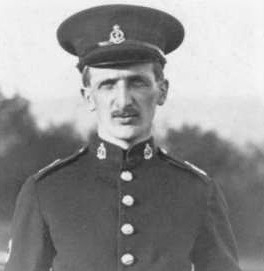
Arthur William Stevens's Story.
1884 – Birth
The birth of an Arthur William S Mason was recorded in the Mutford District in the October to December quarter, (Q4), of 1884.
1891 Censuses of England & Wales and Scotland
The 6 year old Arthur W S Mason, born Lowestoft, was recorded living at 16 Laundry Lane, Lowestoft. The head of the household is his married mother, Charlotte Mason, born Ipswich. Charlotte also has three daughters living with her – Ellen C F, (8), Charlotte F, (5) and Alice M, (3), all born Lowestoft.
The most likely match for his future wife is a 4 year old Alice Landles, born Lowestoft, who was recorded living at 50 Towning Street, Lowestoft. This was the household of her married mother Alice, aged 27, born Lowestoft. The young Alice has 3 siblings.
1901 Censuses of England & Wales and Scotland
Charlotte Mason, (38, married), and her children were recorded living at 71 Norwich Road, Lowestoft. They are:-
Arthur………aged 16…..born Lowestoft
Charlotte……aged 15…..born Lowestoft
Millicent……aged 9……born Lowestoft
Elsie………..aged 5…….born Lowestoft
Stanley……..aged 3…….born Lowestoft
Doris……aged 11 months..born Lowestoft
His future wife Alice, (14), her mother Alice, (35) and three other children were recorded living at 29 Selby Street, Lowestoft.
1910 – Marriage
The marriage of an Arthur W S Mason to an Alice M Landles was recorded in the Southwark District of London in the October to December quarter, (Q4), of 1910.
1911 Census of England and Wales
The 26 year old Arthur William Stevens Mason, born Lowestoft, a Photographers Assistant, was recorded as a Boarder staying at 25 Beaconsfield Street, Chester.Arthur has been married under 1 year. The other boarder in the household is also married under one year, the 23 year old Alice Edith Mason, also born Lowestoft. Although the census schedule does not state it explicitly, it would be hard not to come to the conclusion that they are husband and wife. The couple so far are childless.
His widowed mother Charlotte, (50), was recorded as the head of the household at 58 May Road, Lowestoft. She states she has had 8 children, all then still alive. Children still single and living with her are Charlotte, (25, Domestic Cook), Elsie, (15) and Stanley, (13, Stationers Errand Boy). Also living in the household is Charlottes’ grand-daughter Queenie Mason, (aged 8 months and born Lowestoft).
Post August 1911 when the published information changed, a check of the General Registrars Office Index of Births for England and Wales produces just one potential child of Arthur and Alice. The birth of a Mary J Mason, mothers maiden name Landles, was registered in the Chester District in the July to September quarter, (Q3), of 1912.
His brother Stanley is the next name on the memorial.
Arthur enlisted at Chester and was living at 54 Gladstone Road Chester
On the day
From “The History of the Lancashire Fusiliers 1914-1918”.
Page 415
The 2nd Battalion (Lieutenant-Colonel H. A. Kirkby, D.S.O.), moved down from Flanders at the end of August and was sent once more to the trenches it knew so well near Monchy-le-Preux. On 1st September orders were received that the battalion was to take part in an attack on the Drocourt-Queant Line on the following day.
The preparations were not helped by the persistent gas shelling which caused the unit to lose Second-Lieutenant C. Dunlevy, M.C., about noon and Captain G. N. Stange, M.C., in the afternoon, both belonging to "A" Company. Nevertheless, by the evening the battalion had assembled north of Remyand close behind the two leading battalions of the 12th Infantry Brigade, the 2nd Essex Regiment and the 1st King's Own. Further difficulties were caused by the facts that "A" (Second-Lieutenant H. W. Montgomery) and "D" (Second-Lieutenant D. McIntosh) Companies had each to provide a carrying party in the evening to take ammunition to forward dumps and that "A" Company had also to attach two platoons to the King's Own for the blocking on the left of the first two trenches of the Drocourt-Queant Line. The carrying parties were kept at work until the rest of the battalion had formed up and were unable to rejoin their companies until dawn. Very valuable work was done before the battle by Lieutenant A.R. Topping. He carried out several road reconnaissances under considerable difficulties and heavy shell fire; while at night he succeeded in bringing up the transport with its precious load of ammunition, rations and water through many obstacles, including shell fire which had destroyed an important bridge.
At 5 a .m. on 2nd September the barrage for the attack came down. Very soon after, the battalion suffered a severe loss in the death of Captain G. G. ("Granny") Bowen, M.C., an outstanding and much-loved officer, whose funeral two days later was attended by all available officers and the whole of his own "B" Company.
The attack took a confused course; and the battalion, although nominally in support, was involved at an early stage in some stiff fighting. Second-Lieutenant D. McIntosh and his runner, Private ]. B. Currie, saw two German field guns firing on the British front line and the tanks supporting the attack-indeed one tank had been put out of action-but McIntosh took a few of his men and rushed the guns, killing an officer and three men at one gun and taking the rest prisoner, while Currie worked his way round to the flank of the other gun, shot the officer as he was about to reload it, and with the help of a serjeant rounded up the crew. By 9 a.m. the brigade's objectives had been taken, except on the left near Etaing, with many prisoners. Most of the rest of the day was spent in consolidation, under great difficulties owing to constant shell fire and the arrival of additional German machine guns on the ridge east of Eterpigny, which caused numerous casualties and reduced "A" Company's remaining officers to one very junior officer, recently arrived from England. Later, the battalion was ordered to withdraw from its position on the day's objective and form up on the "Orange Line," north of Eterpigny, in readiness for an attack on Etaing.
The companies were very scattered, there was no telephone communication and few of the runners-the real heroes of every battle -knew the way to "B," "C" or "D" Companies, which had gone farther to the right than had been intended. The result was that when zero for the new attack came at 5 a.m. on 3rd September, only "A" Company was fully ready and in position, and the others had to be thrown in as soon as they arrived.
Researched Simon Gildea and The Great War Forum