


Walter Robinson's Story.
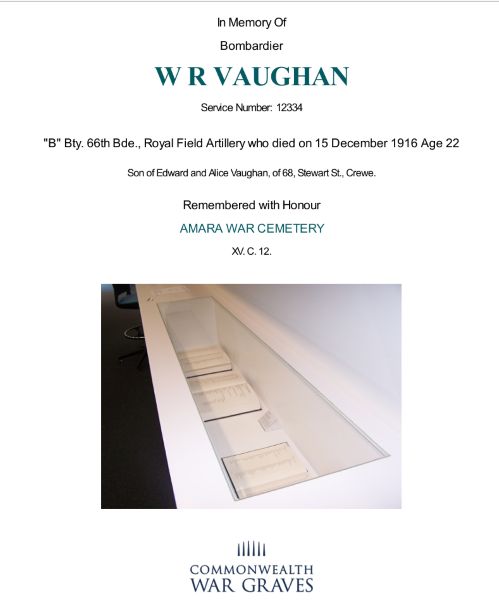
Bombadier Walter Robinson Vaughan, 12334 of the Royal Field Artillery, 'B' Battery, 66th Brigade, died of wounds on 15th December 1916 at Sinn Abtor, in Mesopotamia (Iraq). He was 22 years old. He is buried in Amara War Cemetery, Iraq.
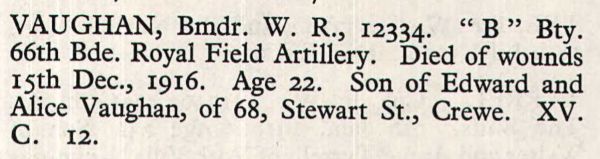
It is not clear why his parents' address is incorrectly given as Stewart Street - it should be 109 West Street.
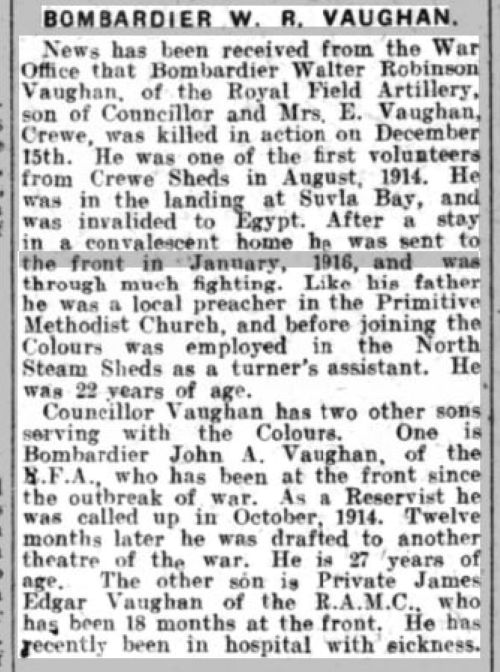
"A Sunday School teacher and secretary of the Bradfield Road Methodist Church, he was one of the first to enlist from the Crewe North Steam Sheds, where he had worked as a turner's assistant and labourer. He took part in the landings at Suvla Bay (landing in Egypt on July 1,1915), and after a stay in a convalescent home following a bout of fever, went back to the Front in January 1916."
What do we know about Walter?
Walter Robinson Vaughan was born in Crewe, in the spring of 1894. He was the eighth child of Edward Vaughan (1858 - 1919) and Alice Marshall (1859 - 1931) and brother to ten siblings: Margaret Alice (1880–1961), Frederick Robert (1882–1958), Joseph Marshall (1884–1951), John Arthur (1888–1964), Thomas Henry (1888–1963), Arthur (1890), William Edward (1891–1962), Mary E Vaughan (1897–), James Edgar (1898–1977) and Mabel Isabella (1901–1984).
His parents had moved to Crewe from Southport just a couple of years before he was born, and their address for many years was 109 West Street, where they ran an ironmongers and hardware shop. His father had at one time been a miner in Shropshire, and then trained as a carpenter. He gained twenty years experience working in the hardware department in Southport, before moving to Crewe to set up his own business. In 1903, when Walter was 9, his father Edward was elected on to the town council, and by 1913, his parents were Mayor and Mayoress of Crewe, a position they held for two terms.
In 1914, Edward officially welcomed the Cheshire Regiment to the town in their recruiting camapign. Subsequently, three of his sons joined up, including 20-year-old Walter. He was one of the first young men to go from the Crewe North Steam Sheds, where he was employed as an assistant turner. He enlisted in Chester at the end of August 1914. His elder brother John was already a bombadier in the Royal Field Artillery, and Walter was keen to join him in France, apparently giving up the offer of a possible commission in order to be in the same regiment. His younger brother James joined the RAMC. Both of these brothers survived the Great War.
In 1914, Edward officially welcomed the Cheshire Regiment to the town in their recruiting camapign. Subsequently, three of his sons joined up, including 20-year-old Walter. He was one of the first young men to go from the Crewe North Steam Sheds, where he was employed as an assistant turner. He enlisted in Chester at the end of August 1914. His elder brother John was already a bombadier in the Royal Field Artillery, and Walter was keen to join him in France, apparently giving up the offer of a possible commission in order to be in the same regiment. His younger brother James joined the RAMC. Both of these brothers survived the Great War.
In 1911, Walter aged 17 had been working as a butcher's assistant, and living with his eldest sister Margaret and her husband John Chidlow at 102 Bradford Road North, Huddersfield, Yorkshire. Like his father and other members of the family, Walter was an active member of the church. In Crewe, he was a Sunday School teacher and secretary of the Bradfield Road Methodist Church, and was a preacher at the Northumberland Street Methodist Church in Huddersfield. His sister Margaret had been very involved in the Wedgwood Chapel in Crewe until she and her husband John moved away to Huddersfield in 1908. There, they were key members of their local church. Walter's brother-in-law John was a trustee and she sang in the choir. It is possible that Walter's experience in preaching had provided him with the leadership qualities that led to his being invited to sit the exams for a commission. He passed two of the preliminary tests before withdrawing his application in favour of an unsuccessful attempt to serve alongside his brother in France.
Instead, he was posted to Gallipoli, arriving in Egypt on 1st July 1915. He took part in the amphibious landings at Suvla Bay on the Aegean coast of the Gallipoli peninsula in the Ottoman Empire. This was part of the August Offensive, the final British attempt to break the deadlock of the Battle of Gallipoli. The landing, which commenced on the night of 6th August 1915, was intended to support a breakout from the ANZAC sector, five miles (8 km) to the south.
Although initially successful, against only light opposition, the landing at Suvla was mismanaged and chaotic. On 15th August, after a week of indecision and inactivity, the British commander at Suvla, Lieutenant-General Sir Frederick Stopford, was dismissed. His performance in command is often considered one of the most incompetent feats of generalship of the First World War.
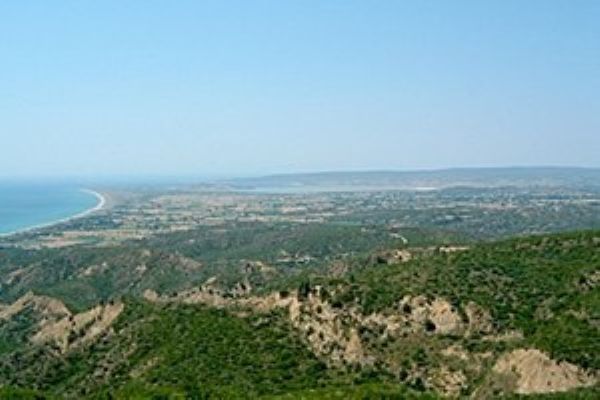
Suvla Bay
Walter survived the conflict in Gallipoli. After a stay in a convalescent home following a bout of fever, Walter went back to the Front in January 1916. He died of wounds on 15th December 1916 at Sinn Abtor, in Mesopotamia (Iraq). He was 22 years old. He is buried in Amara War Cemetery, Iraq.
Instead, he was posted to Gallipoli, arriving in Egypt on 1st July 1915. He took part in the amphibious landings at Suvla Bay on the Aegean coast of the Gallipoli peninsula in the Ottoman Empire. This was part of the August Offensive, the final British attempt to break the deadlock of the Battle of Gallipoli. The landing, which commenced on the night of 6th August 1915, was intended to support a breakout from the ANZAC sector, five miles (8 km) to the south.
Although initially successful, against only light opposition, the landing at Suvla was mismanaged and chaotic. On 15th August, after a week of indecision and inactivity, the British commander at Suvla, Lieutenant-General Sir Frederick Stopford, was dismissed. His performance in command is often considered one of the most incompetent feats of generalship of the First World War.
Suvla Bay
Walter survived the conflict in Gallipoli. After a stay in a convalescent home following a bout of fever, Walter went back to the Front in January 1916. He died of wounds on 15th December 1916 at Sinn Abtor, in Mesopotamia (Iraq). He was 22 years old. He is buried in Amara War Cemetery, Iraq.
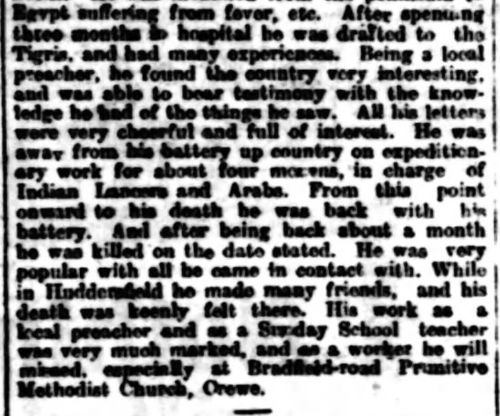
Newspaper Obituary:
The death of Bombardier Walter R Vaughan (son of Councillor E. Vaughan, J.P. and Mrs Vaughan, an ex-Mayor and ex-Mayoress of Crewe, of 109 West Street, Crewe, which was published in "The Chronicle" a few weeks ago, has been made fully known by a letter received this week from the chaplain serving in Mesopotamia. His letter is as follows:
“Long before this reaches you the sad news of your son's death will have been received. Doubtless, however, you will welcome what further particulars l am able to give. Bombardier W. R. Vaughan, R.F.A., was wounded in arm, back. and head on the morning o! December 15th. He was taken to the dressing station and brought into this field ambulance. All was done for him by the doctors that was possible, but he never regained consciousness, and passed peacefully away about 12.30 a.m. on the 16th. I knelt and prayed with him before he died, and buried him on the16th December in the little soldiers' cemetery at Sinn Abtar.
None of his personal effects were on him when he died, except his pocket knife and this his friend Sutton has taken. You in doubtless get belongings through the usual channel. It may comfort you to know that his comrades all bear testimony to his consistent Christian character and manly bearing. Though I do not know you personally, I may say that I very sincerely sympathise with you all in your great loss and I pray that you may be divinely comforted and sustained. Your son died doing his duty, and did it well. 'Greater love hath no man than this, that a man lay down his life for his friends.’ While I write this the artillery on both sides are banging away at each other.
Believe me, yours very sincerely, S. G. Delafield, C. F. Primitive Methodist”


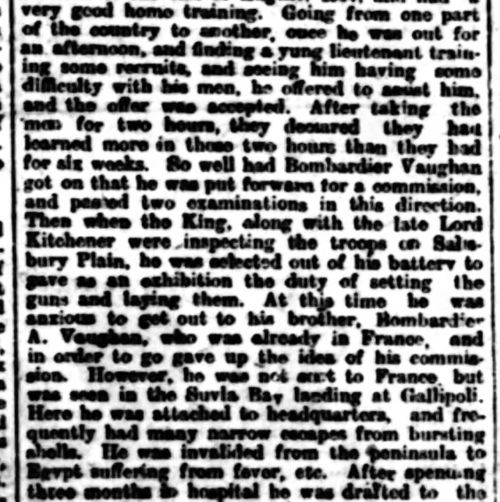
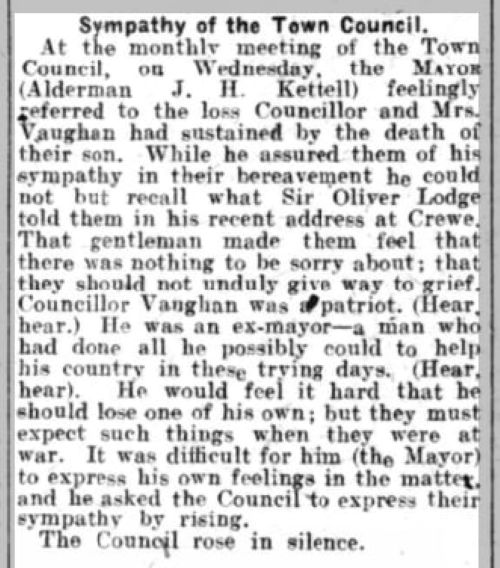
Another newspaper report gave an account of the Town Council extending their sympathy to Walter's father.
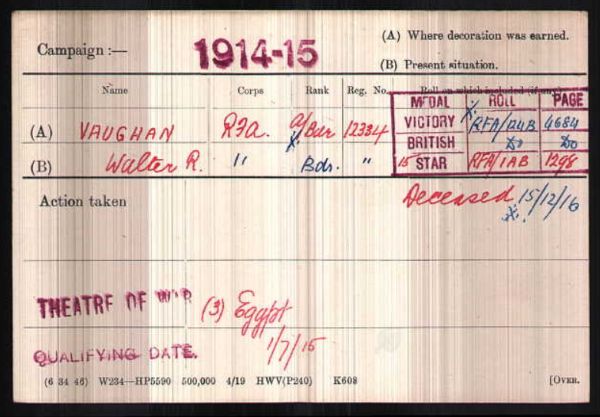
Walter's Medals card
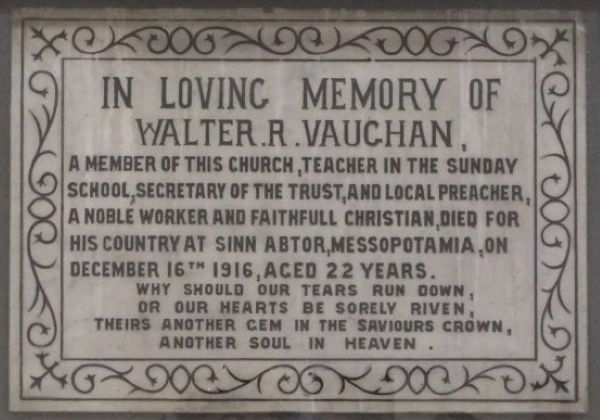
Plaque at Coppenhall Church, Crewe.
Wedgwood Chapel, Crewe
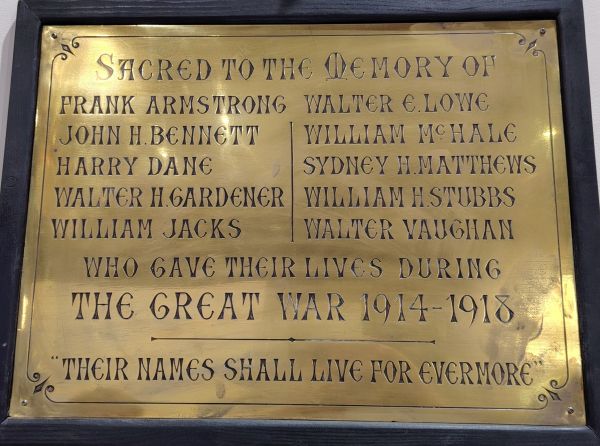
This memorial was originally located at the Wedgwood Methodist Chapel on Heath Street but after the closure of the church in 1969 the memorial was mislaid. In 2004, the memorial was re-discovered and presented to the Hightown Methodist Church where it was displayed until the Church closed in 2010. It was then moved to the Heritage Centre, Vernon Way, Crewe. Walter's family had close links to the Wedgwood Chapel.
Crewe Railway Station
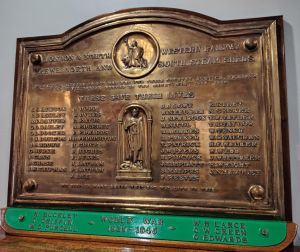
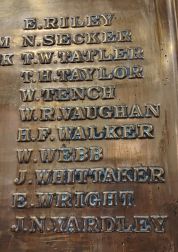
Walter is also remembered on a plaque, currently (2025) on display in the First Class Lounge above Platform 5.
Memorial in Huddersfield
According to "Huddersfield's Roll of Honour: 1914-1922" by J. Margaret Stansfield (pub. 2014), Walter's name was amongst those commemorated on a Roll of Honour in Northumberland Street Methodist Church. However, the church closed in 1957 and was demolished in the 1962, and it seems unlikely that the memorial survived.
Fred Ainley (1894-1916)
Frank Bickerdike (1891-1915)
Harry Edward Creaton (1894-1917)
James Humphrey Gaulton (1880-1917)
Frederick Nelson (1893-1917)
Willie Varley (1893-1916)
Walter Robinson Vaughan (1894-1916)
Memorial in Huddersfield
According to "Huddersfield's Roll of Honour: 1914-1922" by J. Margaret Stansfield (pub. 2014), Walter's name was amongst those commemorated on a Roll of Honour in Northumberland Street Methodist Church. However, the church closed in 1957 and was demolished in the 1962, and it seems unlikely that the memorial survived.
Fred Ainley (1894-1916)
Frank Bickerdike (1891-1915)
Harry Edward Creaton (1894-1917)
James Humphrey Gaulton (1880-1917)
Frederick Nelson (1893-1917)
Willie Varley (1893-1916)
Walter Robinson Vaughan (1894-1916)
Researched by Shena Lewington (August 2025)