


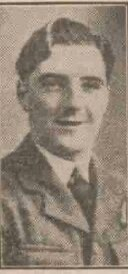
Harold Charles's Story.
Harold Charles Tuckwell was born to parents Charles and Margaret Tuckwell in the village of Saltney near Chester in March 1921. Before the war he worked at the Brookhirst Electrical Switchgear factory at Chester. He joined the RAF in October 1939 aged 18 and trained as a Wireless Operator Air Gunner.Harold joined 40 Squadron RAF at RAF Wyton in January 1941 just after they converted to Wellington bombers. He was assigned as front gunner. He flew 14 missions with 40 Squadron before being killed on his 15th mission.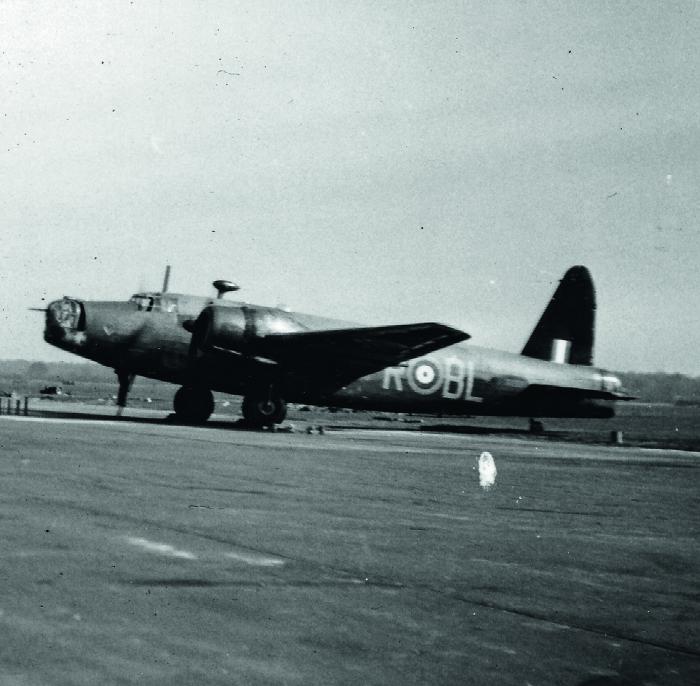
40 Squadron Wellington bomber
Notable missions flown by Harold Tuckwell.
Life for bomber command crews during WW2 were fraught with danger as exemplified by the following missions flown by Harold.
1st January 1941 Bremen
23rd February 1941 Guipavas Luftwaffe airbase Brest
25th February 1941 Dusseldorf
1st March 1941
On this day Harold’s crew led by pilot Sergeant Archer actually flew two missions. For their first mission they took off at 0020hrs for the naval base at Wilhelmshaven but were forced to abandon the mission when they tried to drop a flare over the target and the flare exploded in the flare launch tube causing the pilot to believe that they had been badly hit by AA fire so they jettisoned the bombs and returned to base arriving at 0605hrs. Their second mission on this day was to bomb Cologne and they took off at 1900hrs arriving back at base at 0125hrs on 2nd March.
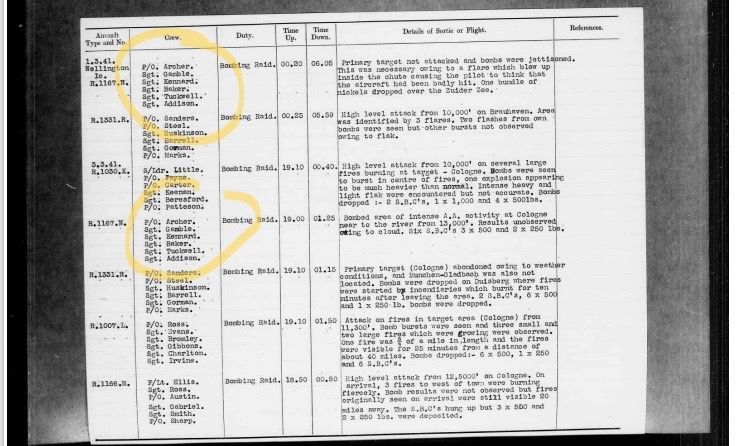
Operation Record for 1st March 1941 with Harold's two missions highlighted
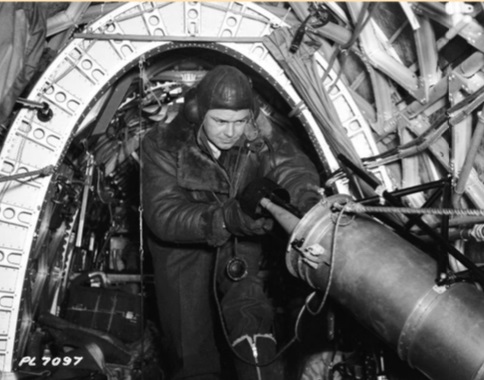
Wellington flare tube where the flare exploded on March 1st
12th March 1941 Geisenkirchen
14th March 1941 Bremen
7th April 1941 Kiel
8th April 1941 Kiel
10/11 April 1941
On this day Harold’s crew led by pilot Sergeant Finlayson were tasked with the bombing of the Luftwaffe base at Merignac in Bordeaux. They took off at 2115hrs but 50 miles from the target their starboard engine failed causing the plane to lose height rapidly. They jettisoned the bombs and started to head for home. They jettisoned everything on the aircraft that wasn’t needed for flying to try to avoid losing height and flew back to England where they landed at Chivenor.

Operation record for 10/11th April
15th April 1941 Kiel
17th April 1941 Berlin
24th April 1941 Kiel
29/30 April 1941
On this mission Harold’s crew led by pilot were tasked with bombing Kiel and they took off at 2035hrs but upon reaching the coast the aircraft suffered a total electrical failure which resulted in them abandoning their mission and returning to base arriving at 2200hrs. Flying without electrical power would have been extremely hazardous as they would have had no altimeter, compass or internal lighting.

29/30 April Operation Record
11/ 12th May 1941 Harold’s final mission.
This mission was to bomb Hamburg. As they were returning home after dropping their bombs the aircraft was caught in searchlights and was attacked by an ME110 Night fighter flown by Obl. Helmut Lent of NJG1 night fighter squadron and was shot down crashing near the town of Suderstapel. All crew were killed with the exception of Sgt Shaw, the radio operator who was blown out of the aircraft at altitude by an explosion and managed to deploy his parachute. The dead crew members were given a military funeral by the Germans and were buried at Suderstapel Cemetery. After the war they were re buried at Kiel Military Cemetery in 1947.

May 11th/ 12th Operation Record
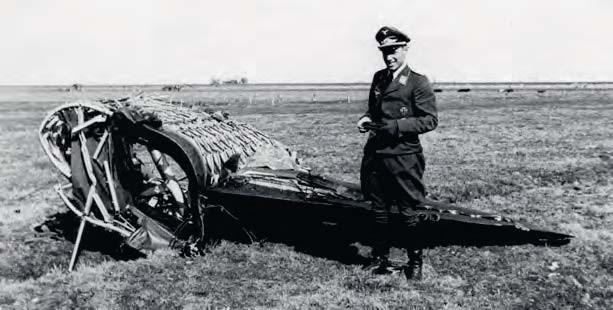
Obl. Helmet Lent poses for a trophy photo with Harold's aircraft
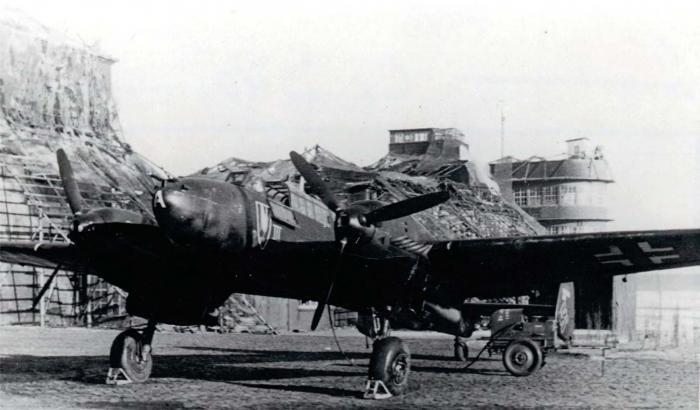
ME110 Nightfighter of NJG1
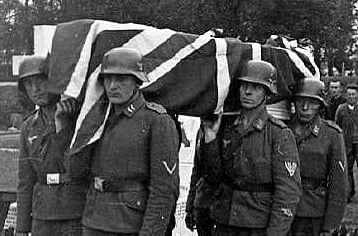
German soldiers burying the crew
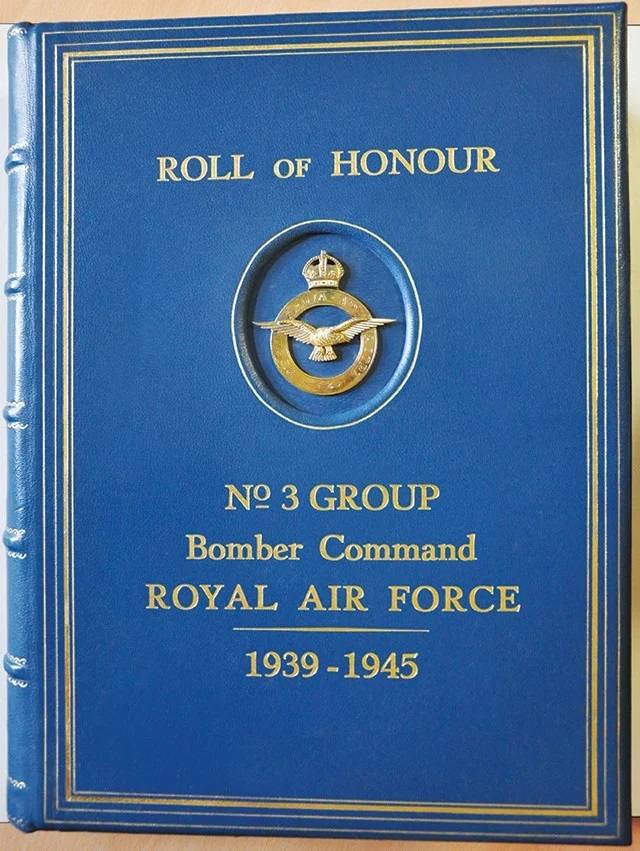
Harold is buried at Kiel Military Cemetery and is commemorated in the No 3 Group Bomber Command Roll of Honour book located at Ely Cathedral.
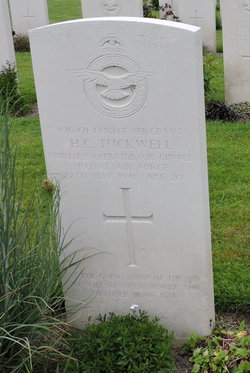
Harold's grave at Kiel
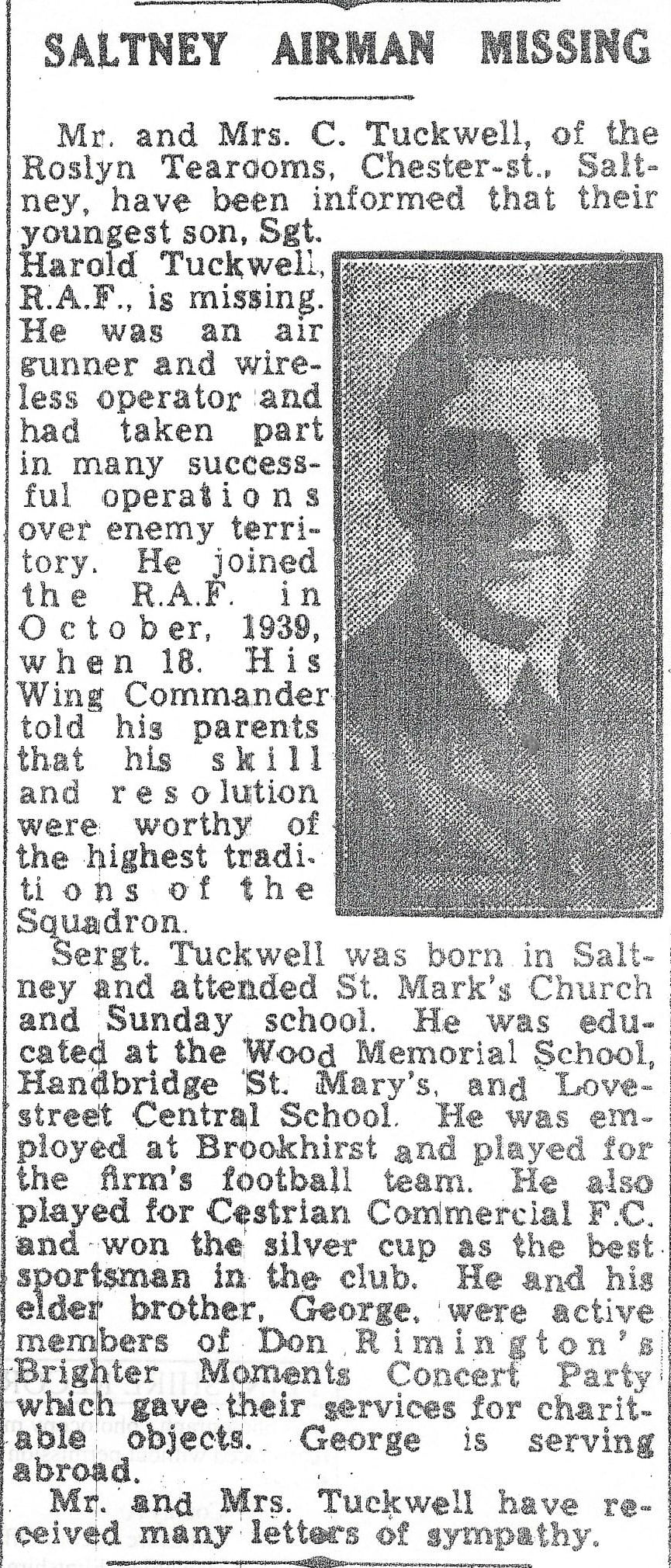
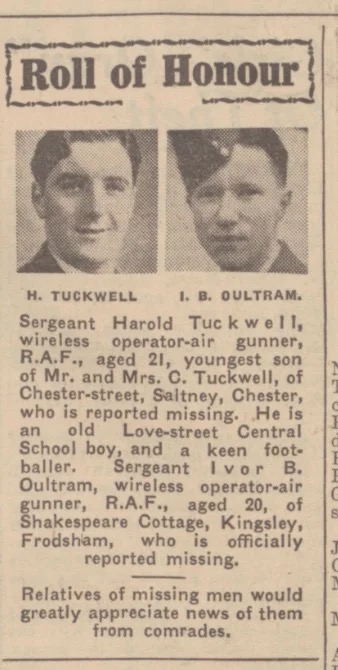
Evening Express 26 May 1941