


Ernest's Story.
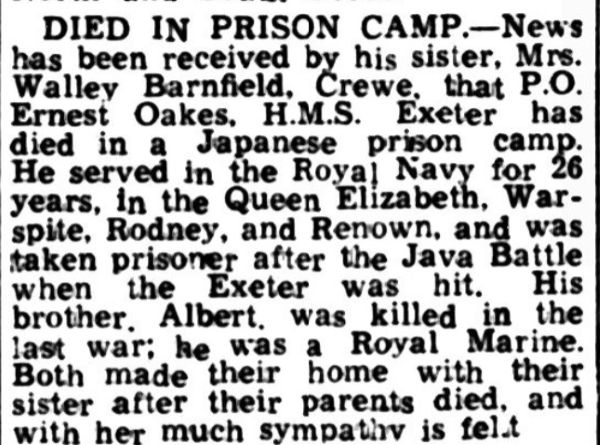
Petty Officer Ernest Oakes died of pulmonary tuberculosis while in a Japanese prisoner of war camp in Indonesia. He was 43 years old.
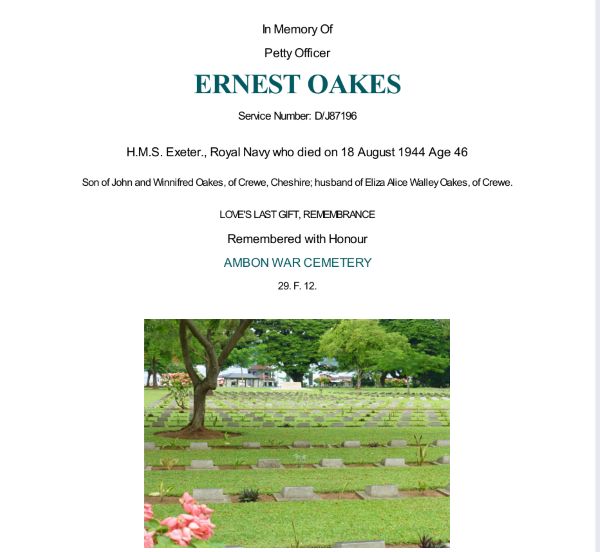

(Ernest's step-sister Eliza is wrongly identified as his wife.)
Ernest Oakes was born on 13th April 1901, the second son of John Oakes (1865 - 1914) and Winifred nee Pickersgill (1867–1915) and brother to William Albert Oakes (1897 –19416) and Martha (1887 - ) and Eliza Alice Latham (1889 - 1966), his step-sisters from his mother's first marriage. A fortnight before he was born, the 1901 census (March 31st) shows the family living at 11 Gladstone Street, Crewe: father John Oakes a blacksmith striker, mother Winifred, step sisters Martha and Eliza Alice, and his uncle George Pickersgill, a general labourer from Liverpool. By 1911, the family had moved to 11 Furber Street.
In November 1914, when Ernest was 13 years old, his father died at the age of 48, and just three months later, in February 1915, his mother died of burns when her nightdress caught fire. The orphaned boys Ernest and his brother William went to live with their stepsister Eliza, who had married Arthur Edward (properly Edwin) Walley (1884 - 1926) on Christmas Day 1912. Their address was 25 Barnfield, Crewe.
In October 1916, his elder brother William died of wounds in France during WW1. The following year, when Ernest was sixteen, he joined the Royal Navy, and would have given his sister Eliza's name as his next of kin. His first ship was HMS Impregnable, on which he served from 3rd April 1918.
From his naval records, we know that Ernest was 5' 8" in height, with brown hair and grey eyes. His initial 12-year service ended in 1927.

From his naval records, we know that Ernest was 5' 8" in height, with brown hair and grey eyes. His initial 12-year service ended in 1927.
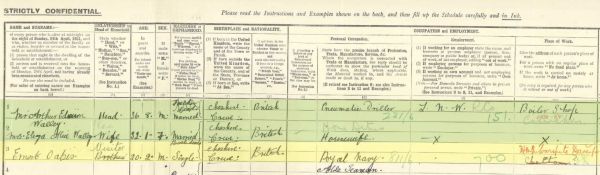
The census of June 1921 shows Ernest visiting Eliza and brother-in-law Arthur Walley in Crewe. By that time, he was Able Seaman Oakes, based at Chatham, Kent but stationed at Devonport, near Plymouth on HMS Warspite.
On 13th April 1925, he married 23-year-old Georgina Lily Ruth Churchill (1902 - 1985) at Stoke Damerel, in Devon. Their address at the time of his death was 39 Fleetmoor Road, Davenport.
At the outbreak of war in 1939, Ernest and Georgina were still living near Plymouth, with his rank shown as Petty Officer. Once again on active service, Ernest was aboard HMS Exeter when it was attacked by Japanese ships Haguro and Nachi on 1st March 1942.
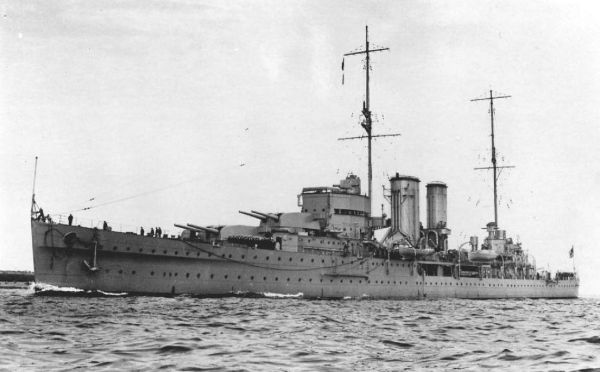
HMS Exeter
This account describes how the ship had to be abandoned, and was sunk by torpedo.
March 1st 1942. Ambushed by Japanese cruisers HAGURO and NACHI escorted by four destroyers which were engaged in a running fight. Soon afterwards hit in boiler room and lost use of director control for main armament.
Despite smoke screens laid by destroyers received more hits. Fires broke out and all electrical power supplies failed.
Ship was abandoned after 3 hours in action. Finally sunk by torpedo.
54 of the ship’s company were killed in this action and 651 were rescued by Japanese ships and became POW.
The Crewe Chronicle reported a week later that Ernest's sister Eliza had been notified of his being taken prisoner. We can assume Georgina, as Ernest's current next of kin, was contacted first and that she let Eliza know the news.
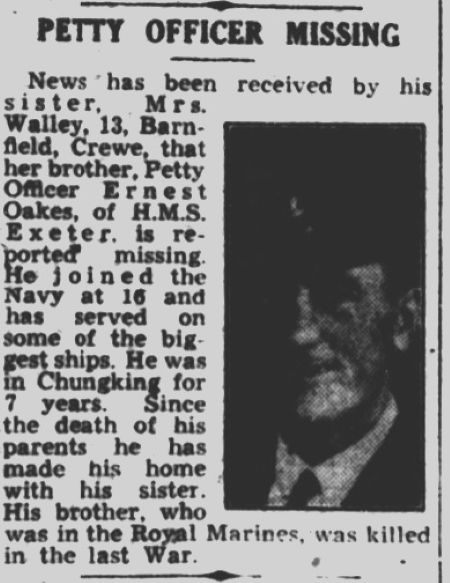
Crewe Chronicle, 28th March 1942
Ernest spent two years in a prisoner of war camp at Macassar Celebes (now known as Ujung Pandang in Sulawesi, Indonesia). A fellow prisoner drew this sketch of the camp in 1943.
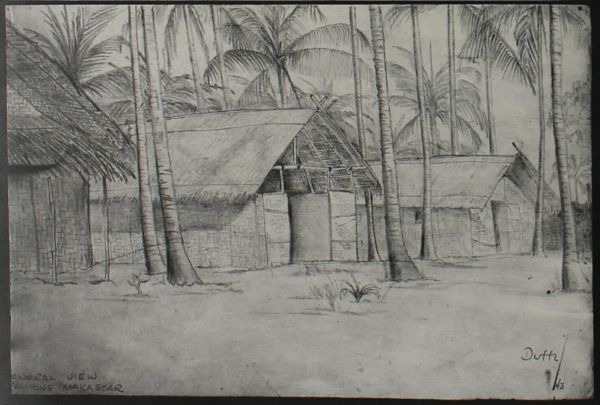
The POW camp at Makassar now known as Macassar, in Dutch Indies, sketched by Prisoner Duffy
Conditions in the camp were brutal. An account by a commanding officer who had been there described the lack of food, frequent beatings and hard labour. He wrote that:
The only clothes we had were those we were wearing on being sunk and we were devoid of any other possessions. Men were crowded into barracks, 4 sometimes 5 to a cubicle 8 foot by 6 with no bedding and no food utensils. Mosquitoes were very bad and bites incurred at night soon turned septic. The morale of the men was low due to hunger, sickness and general conditions and poor prospects for the future.
The Japanese method of maintaining discipline is by assault on the face with fists and the infliction of corporal punishment. This was usually done by a baseball bat, but also included such things as pick-axe handles, spades, bamboos or any other weapon which was handy. Later on special clubs were made. Punishment was usually inflicted on the backside but in bad beatings any part of the body was liable to be struck. Punishment was often accompanied by Ju-Jitsu throwing, and long periods in the “stoop-fall” position, before and/or after the beating. The number of strikes varied between 5 and 50 and depends on the state of rage of the Guard, the crime, and whether the victim was one of YOSHIDA’s likes or dislikes. Beatings were often done in the mass and in full view of the Camp. In a bad beating victims would be knocked down and kicked and stamped on whilst on the ground. One of my men had his wrist broken and was forced to do “press-ups” after the injury had been inflicted. Ear drums were often broken and other bodily harm inflicted.
Men down town working were often beaten up by the guards on the spot and reported to YOSHIDA on return to the Camp. They would then have to go through further punishment on a body already black and blue with bruises and stiff from blows. Other forms of punishment included long periods of standing the Tropical sun, doubling around the camp in wooden clogs up to any period of three hours.
The general life in Camp was drab. No forms of recreation were possible, no singing or concerts permitted. No mails, news, or papers were received. One wireless message was allowed to be sent in November, 1942 – nothing since. A rush mat and a sleeping board were the only furniture provided. The Officers had some chairs and tables. Clothes were very scarce, only Dutch uniform; practically all clothing was covered in patches; no footwear except wooden clogs. Sometimes Religious Services were allowed, usually not. Lectures and school classes were considered conspiratorial assemblies. A good library of English books was the sole decent amenity of life. Everything else was shabby, cheap, stinted or restricted. Despite this, morale in 1943 was very good, men hopeful, confident and cheerful. The attitude of the Japanese was to humiliate the European in the eyes of the Asiatic, to lower the position of all ranks and ratings to one lower than the coolie. I am certain in my own mind that if their attack on Australia had succeeded, all Prisoners of War would have been transported for work in Jungles, mines and deserts where they would have been treated like slaves till death intervened. Subsequently they would have been replaced by more man-power from the occupied territories until such time as these Countries had been denuded and ready for Japanese Colonisation. That was their diabolic plan and it was not until their successful advance was stemmed that they started to take a little interest in registering and reporting prisoners. That they took any prisoners at all was only due to their desire for cheap man-power; that they kept them just alive only because it was fashionable to have prisoners. (Report by G.T. COOPER, LIEUTENANT-COMMANDER, ROYAL NAVY)
Ernest Oakes died on 18th August 1944, of pulmonary tuberculosis. He was 43 years old, and left a widow. He had no known children.


Probate was awarded to his wife Georgina. She did not remarry, and moved away from Devonport to live with her mother Francis and stepfather William Gunton at 23 Tunley Road, Brent, Middlesex.

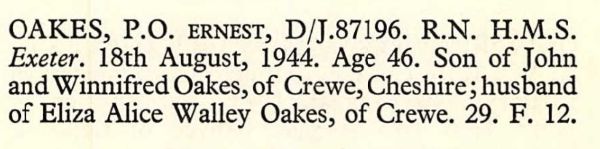
The official record used by the Commonwealth War Graves Commission shows incorrectly that he was the husband of Eliza Walley, and that his age was 46. Hopefully, this information can be corrected by the CWGC in due course.
Researched by Shena Lewington, with additional information supplied by May Ellen Hockenhull (December 2025)
On 13th April 1925, he married 23-year-old Georgina Lily Ruth Churchill (1902 - 1985) at Stoke Damerel, in Devon. Their address at the time of his death was 39 Fleetmoor Road, Davenport.
At the outbreak of war in 1939, Ernest and Georgina were still living near Plymouth, with his rank shown as Petty Officer. Once again on active service, Ernest was aboard HMS Exeter when it was attacked by Japanese ships Haguro and Nachi on 1st March 1942.
HMS Exeter
This account describes how the ship had to be abandoned, and was sunk by torpedo.
March 1st 1942. Ambushed by Japanese cruisers HAGURO and NACHI escorted by four destroyers which were engaged in a running fight. Soon afterwards hit in boiler room and lost use of director control for main armament.
Despite smoke screens laid by destroyers received more hits. Fires broke out and all electrical power supplies failed.
Ship was abandoned after 3 hours in action. Finally sunk by torpedo.
54 of the ship’s company were killed in this action and 651 were rescued by Japanese ships and became POW.
The Crewe Chronicle reported a week later that Ernest's sister Eliza had been notified of his being taken prisoner. We can assume Georgina, as Ernest's current next of kin, was contacted first and that she let Eliza know the news.
Crewe Chronicle, 28th March 1942
Ernest spent two years in a prisoner of war camp at Macassar Celebes (now known as Ujung Pandang in Sulawesi, Indonesia). A fellow prisoner drew this sketch of the camp in 1943.
The POW camp at Makassar now known as Macassar, in Dutch Indies, sketched by Prisoner Duffy
Conditions in the camp were brutal. An account by a commanding officer who had been there described the lack of food, frequent beatings and hard labour. He wrote that:
The only clothes we had were those we were wearing on being sunk and we were devoid of any other possessions. Men were crowded into barracks, 4 sometimes 5 to a cubicle 8 foot by 6 with no bedding and no food utensils. Mosquitoes were very bad and bites incurred at night soon turned septic. The morale of the men was low due to hunger, sickness and general conditions and poor prospects for the future.
The Japanese method of maintaining discipline is by assault on the face with fists and the infliction of corporal punishment. This was usually done by a baseball bat, but also included such things as pick-axe handles, spades, bamboos or any other weapon which was handy. Later on special clubs were made. Punishment was usually inflicted on the backside but in bad beatings any part of the body was liable to be struck. Punishment was often accompanied by Ju-Jitsu throwing, and long periods in the “stoop-fall” position, before and/or after the beating. The number of strikes varied between 5 and 50 and depends on the state of rage of the Guard, the crime, and whether the victim was one of YOSHIDA’s likes or dislikes. Beatings were often done in the mass and in full view of the Camp. In a bad beating victims would be knocked down and kicked and stamped on whilst on the ground. One of my men had his wrist broken and was forced to do “press-ups” after the injury had been inflicted. Ear drums were often broken and other bodily harm inflicted.
Men down town working were often beaten up by the guards on the spot and reported to YOSHIDA on return to the Camp. They would then have to go through further punishment on a body already black and blue with bruises and stiff from blows. Other forms of punishment included long periods of standing the Tropical sun, doubling around the camp in wooden clogs up to any period of three hours.
The general life in Camp was drab. No forms of recreation were possible, no singing or concerts permitted. No mails, news, or papers were received. One wireless message was allowed to be sent in November, 1942 – nothing since. A rush mat and a sleeping board were the only furniture provided. The Officers had some chairs and tables. Clothes were very scarce, only Dutch uniform; practically all clothing was covered in patches; no footwear except wooden clogs. Sometimes Religious Services were allowed, usually not. Lectures and school classes were considered conspiratorial assemblies. A good library of English books was the sole decent amenity of life. Everything else was shabby, cheap, stinted or restricted. Despite this, morale in 1943 was very good, men hopeful, confident and cheerful. The attitude of the Japanese was to humiliate the European in the eyes of the Asiatic, to lower the position of all ranks and ratings to one lower than the coolie. I am certain in my own mind that if their attack on Australia had succeeded, all Prisoners of War would have been transported for work in Jungles, mines and deserts where they would have been treated like slaves till death intervened. Subsequently they would have been replaced by more man-power from the occupied territories until such time as these Countries had been denuded and ready for Japanese Colonisation. That was their diabolic plan and it was not until their successful advance was stemmed that they started to take a little interest in registering and reporting prisoners. That they took any prisoners at all was only due to their desire for cheap man-power; that they kept them just alive only because it was fashionable to have prisoners. (Report by G.T. COOPER, LIEUTENANT-COMMANDER, ROYAL NAVY)
Ernest Oakes died on 18th August 1944, of pulmonary tuberculosis. He was 43 years old, and left a widow. He had no known children.
Probate was awarded to his wife Georgina. She did not remarry, and moved away from Devonport to live with her mother Francis and stepfather William Gunton at 23 Tunley Road, Brent, Middlesex.
The official record used by the Commonwealth War Graves Commission shows incorrectly that he was the husband of Eliza Walley, and that his age was 46. Hopefully, this information can be corrected by the CWGC in due course.
Researched by Shena Lewington, with additional information supplied by May Ellen Hockenhull (December 2025)