


Walter Ewart's Story.
Private Walter Ewart Lowe 78228, of the 50th Field Ambulance, Royal Army Medical Corps was killed in action on 4th October 1917 during the Third Battle of Ypres (Passchendaele). He was 27 years old.
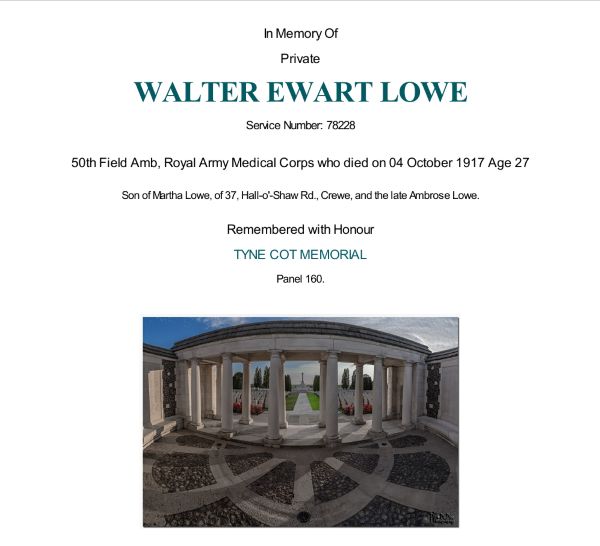
Walter was born on 29th December 1890 at 87 Oakley Street, Crewe, and was baptised on 22nd January 1891 at the Wedgwood Methodist Chapel, on Heath Street. He was the eldest son of Ambrose Lowe (1863 - 1915) and Martha nee Edge (1865 - 1951) and brother to Martha (1899 - 1949), Alfred James (1892 - 1973) and Ambrose (1894 - 1973). His family's connections with the chapel were strong, as his siblings were baptised there too, and his brother Ambrose and great niece Irene Dunning were each married there. Walter was described as an "All round cricketer who played for Wedgwood".
In March 1901, when he was ten years old, his family's home was at 71 Vincent Street, Crewe, but by 1911 they had moved a few hundred yards away to 37 Hall O'Shaw Street, where his mother would live for the rest of her life. It was also occupied by Walter's elder sister Martha and her husband John Hubert Dunning.
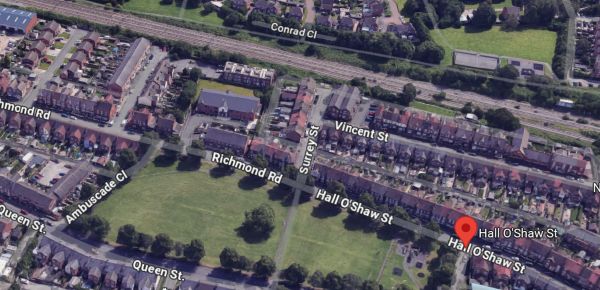
Hall o'Shaw Street is named after the site of the Hall of Shaw, home to the Foulhurst family in the 17th century
In April 1911, 20 year old Walter was employed as an apprentice coachbuilder. His father died in March 1915, and six months later, in September 1915, Walter was dismissed from his job with LNWR as a joiner for "idling". He had been with the railway company for two and half years.

Hall o'Shaw Street is named after the site of the Hall of Shaw, home to the Foulhurst family in the 17th century
In April 1911, 20 year old Walter was employed as an apprentice coachbuilder. His father died in March 1915, and six months later, in September 1915, Walter was dismissed from his job with LNWR as a joiner for "idling". He had been with the railway company for two and half years.
In November 1915, Walter enlisted into the Royal Army Medical Corps at Chester. His attestation documents show that he was 6' tall, and weighed 9 and a half stone. His occupation was given as coachbuilder.
Walter embarked for France on 31st December 1915, arriving in Rouen the following day. By the summer of 1917, he was at Ypres in Belgium, and although RAMC were non-combatants, Walter would have been out on the battlefield, perhaps as a stretcher-bearer.
The Third Battle of Ypres (July - November 1917) is often called Passchendaele. It's been referred to by this name since the 1920s. The village of Passchendaele - and Passchendaele Ridge - were objectives in the final stages of the offensive.
In 1917, General Sir Douglas Haig planned a major offensive to break out of the Ypres salient, which the Allies had occupied since 1914. Haig's vision was for a war-winning breakthrough. He planned to capture the high ground around Ypres, as well as a key rail junction to the east, and then advance on the German-occupied ports of the Belgian coast - critical to the U-Boat campaign. The battle failed to achieve Haig's objectives. It lasted over 100 days. In that time, the Allies advanced about 5 miles for the loss of over 250,000 soldiers killed, wounded or missing.
Rain and mud defined the battle. The rain began on 31 July - the first day of the battle. The battlefield had been churned up by the Allied artillery bombardment, destroying the ditches that acted as a drainage system. The rain continued for three weeks, through August and began again in October. Soldiers struggled through heavy, sticky mud that reached up to their waists. Men, horses, tanks and other vehicles literally drowned in the mud. It was almost impossible to manoeuvre artillery into new positions, and aerial reconnaissance was grounded by the poor visibility.
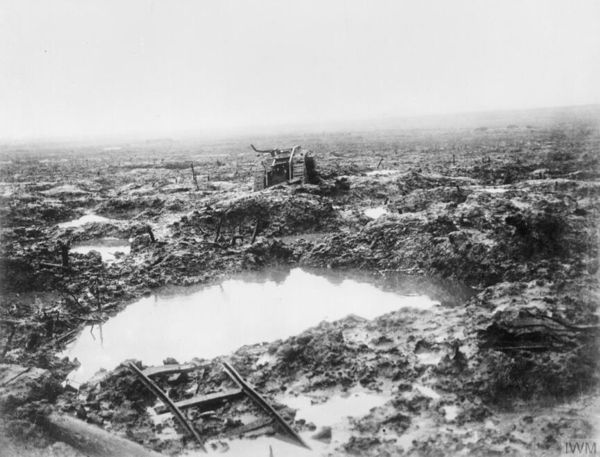
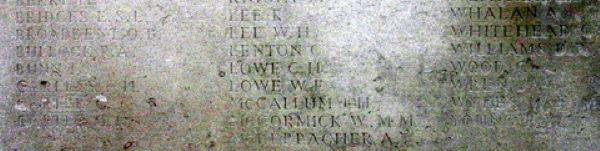
Passchendaele has shaped perceptions of the First World War on the Western Front. Both sides suffered heavy casualties and endured appalling conditions. The name Passchendaele has become synonymous with mud, blood and futility. More than 76000 Allied soldiers died in that offensive, including Walter, who was killed in action on 4th October 1917, aged 27. He is remembered at Tyne Cot Memorial.
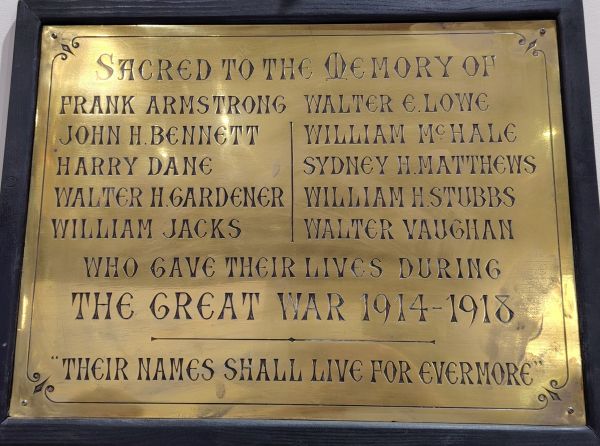
His name is also inscribed on a bronze plaque, originally located at the Wedgwood Methodist Chapel on Heath Street, where Walter had been baptised. After the closure of the church in 1969 the memorial was mislaid. In 2004 the memorial was re-discovered and presented to the Hightown Methodist Church where it was displayed until the Church closed in 2010. Following this, it was moved to the Heritage Centre, Vernon Way, Crewe.
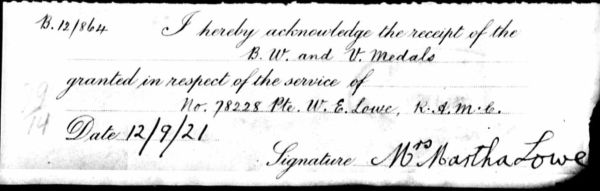
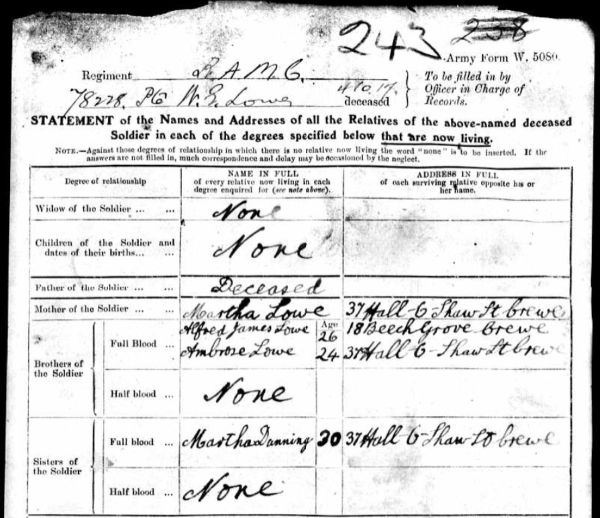
Walter's next of kin was his widowed mother Martha. He left an estate worth £471.

Researched by Shena Lewington (August 2025)
Walter embarked for France on 31st December 1915, arriving in Rouen the following day. By the summer of 1917, he was at Ypres in Belgium, and although RAMC were non-combatants, Walter would have been out on the battlefield, perhaps as a stretcher-bearer.
The Third Battle of Ypres (July - November 1917) is often called Passchendaele. It's been referred to by this name since the 1920s. The village of Passchendaele - and Passchendaele Ridge - were objectives in the final stages of the offensive.
In 1917, General Sir Douglas Haig planned a major offensive to break out of the Ypres salient, which the Allies had occupied since 1914. Haig's vision was for a war-winning breakthrough. He planned to capture the high ground around Ypres, as well as a key rail junction to the east, and then advance on the German-occupied ports of the Belgian coast - critical to the U-Boat campaign. The battle failed to achieve Haig's objectives. It lasted over 100 days. In that time, the Allies advanced about 5 miles for the loss of over 250,000 soldiers killed, wounded or missing.
Rain and mud defined the battle. The rain began on 31 July - the first day of the battle. The battlefield had been churned up by the Allied artillery bombardment, destroying the ditches that acted as a drainage system. The rain continued for three weeks, through August and began again in October. Soldiers struggled through heavy, sticky mud that reached up to their waists. Men, horses, tanks and other vehicles literally drowned in the mud. It was almost impossible to manoeuvre artillery into new positions, and aerial reconnaissance was grounded by the poor visibility.
Passchendaele has shaped perceptions of the First World War on the Western Front. Both sides suffered heavy casualties and endured appalling conditions. The name Passchendaele has become synonymous with mud, blood and futility. More than 76000 Allied soldiers died in that offensive, including Walter, who was killed in action on 4th October 1917, aged 27. He is remembered at Tyne Cot Memorial.
His name is also inscribed on a bronze plaque, originally located at the Wedgwood Methodist Chapel on Heath Street, where Walter had been baptised. After the closure of the church in 1969 the memorial was mislaid. In 2004 the memorial was re-discovered and presented to the Hightown Methodist Church where it was displayed until the Church closed in 2010. Following this, it was moved to the Heritage Centre, Vernon Way, Crewe.
Walter's next of kin was his widowed mother Martha. He left an estate worth £471.
Researched by Shena Lewington (August 2025)